

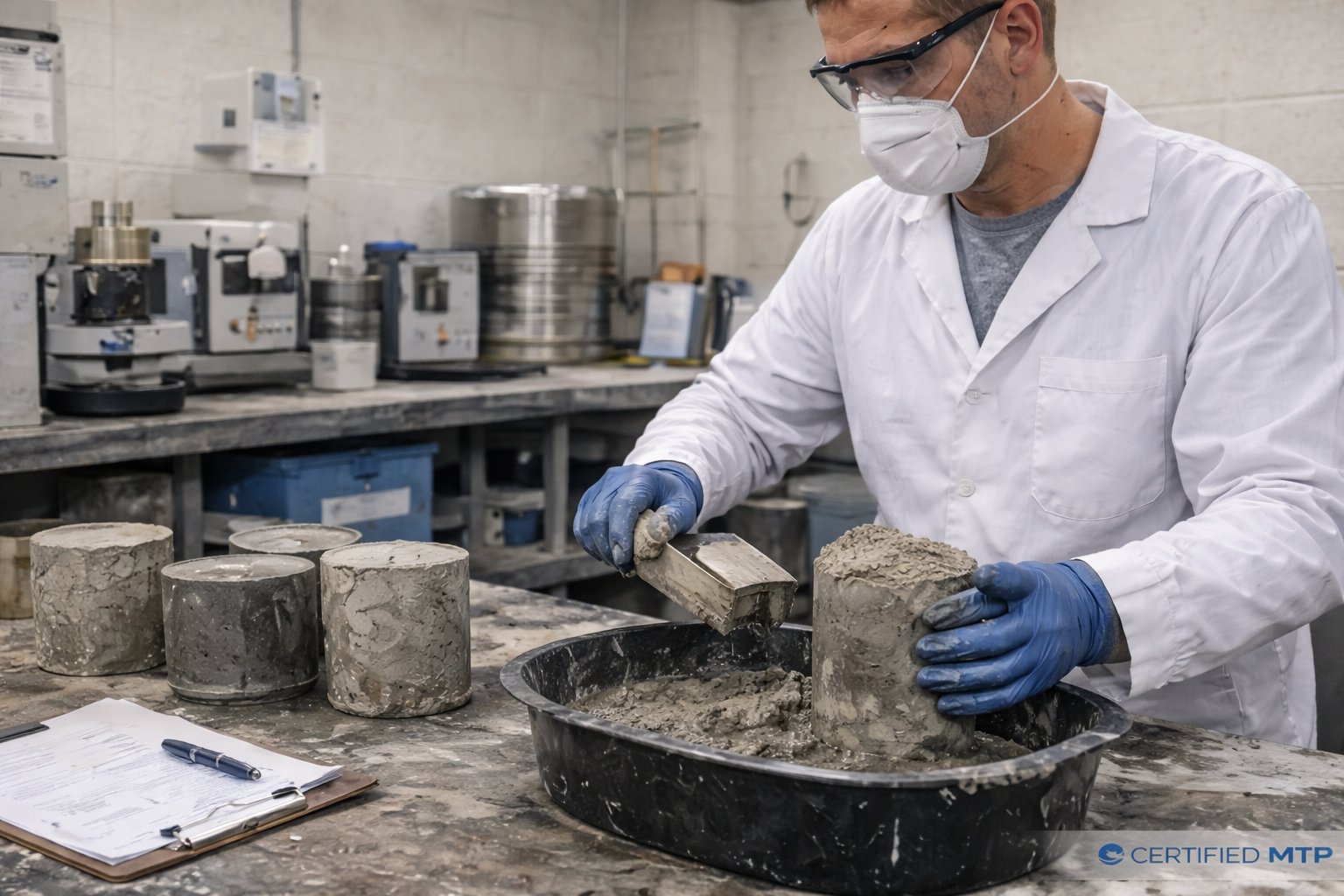
Accurate materials testing doesn’t depend on advanced equipment alone. Behind every reliable test result is a combination of proper laboratory supplies, correct handling practices, and consistent procedures. From sample preparation to final measurements, even small lab tools play a critical role in maintaining testing accuracy and repeatability.
This article explores essential construction materials laboratory supplies, why they matter, and how they support consistent results across concrete, soil, aggregate, and cement testing applications.
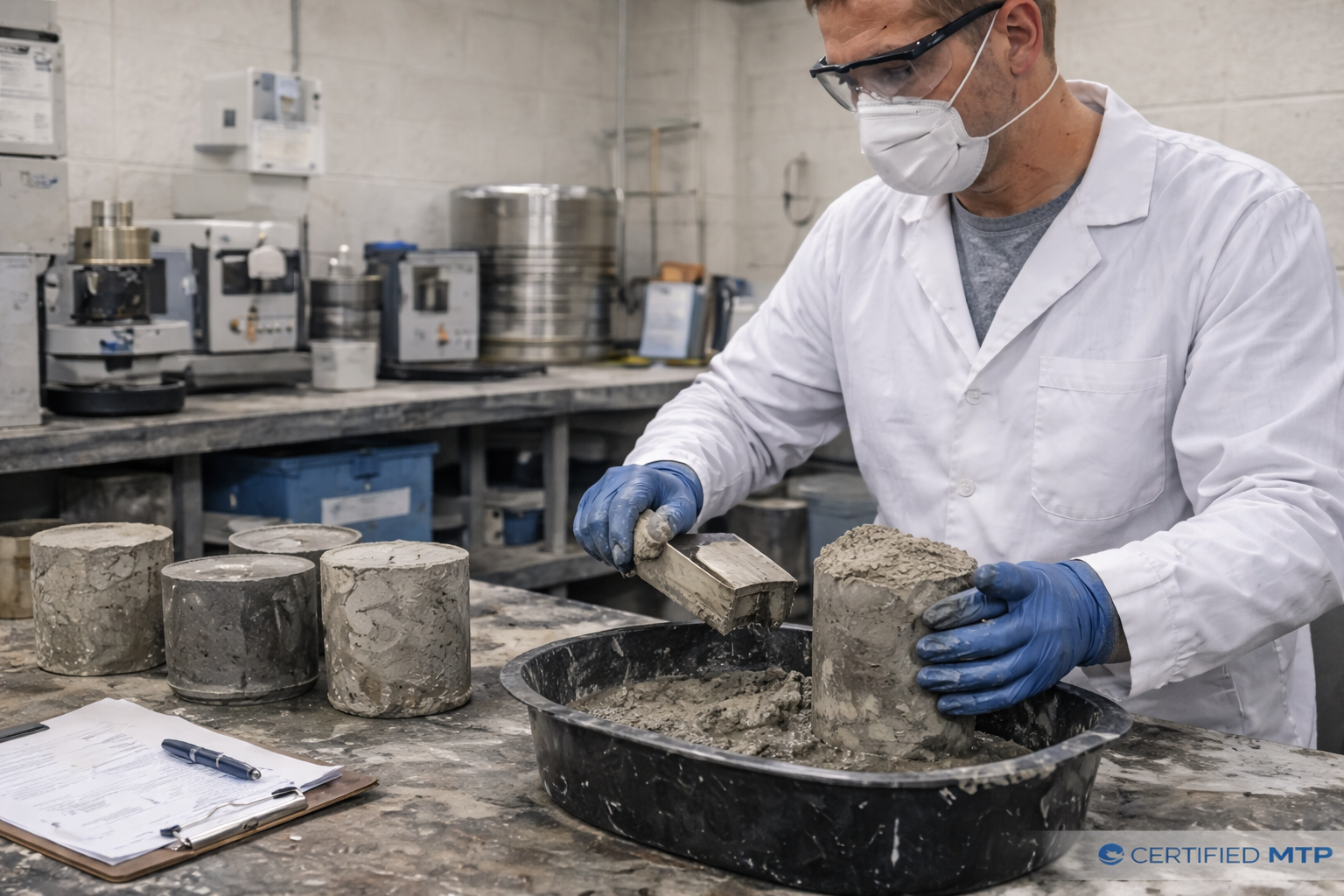
Why Laboratory Supplies Matter in Materials Testing
In construction materials labs, test results directly influence structural decisions, quality control, and compliance with standards such as ASTM and AASHTO. While major testing machines often receive the most attention, supporting lab supplies ensure that samples are prepared, stored, measured, and handled correctly.
Poor-quality or improperly used lab supplies can lead to:
- Inconsistent test results
- Sample contamination
- Measurement errors
- Repeat testing and project delays
Understanding the purpose of each supply helps labs maintain efficiency and accuracy.
Sample Preparation Supplies: The Foundation of Accurate Testing
Before testing begins, materials must be prepared correctly. Sample preparation supplies ensure consistency from one test to the next.
Mixing Pans and Trays
Used extensively in concrete, mortar, and soil testing, mixing pans allow technicians to blend materials uniformly before testing. Proper mixing ensures representative samples and minimizes segregation.
Common uses include:
- Preparing fresh concrete for slump or air content testing
- Mixing soil for moisture or compaction tests
- Blending cement and mortar specimens
These supplies are frequently referenced in fresh concrete testing procedures outlined in Certified MTP’s concrete testing resources.
Scoops, Trowels, and Spatulas
Hand tools like scoops and trowels are essential for transferring materials without altering sample composition. In aggregate and cement testing, precise handling prevents loss of fines or inconsistent quantities.
Best practices:
- Use clean tools between samples
- Avoid cross-contamination
- Match tool size to sample volume
Measurement & Weighing Supplies: Precision Matters
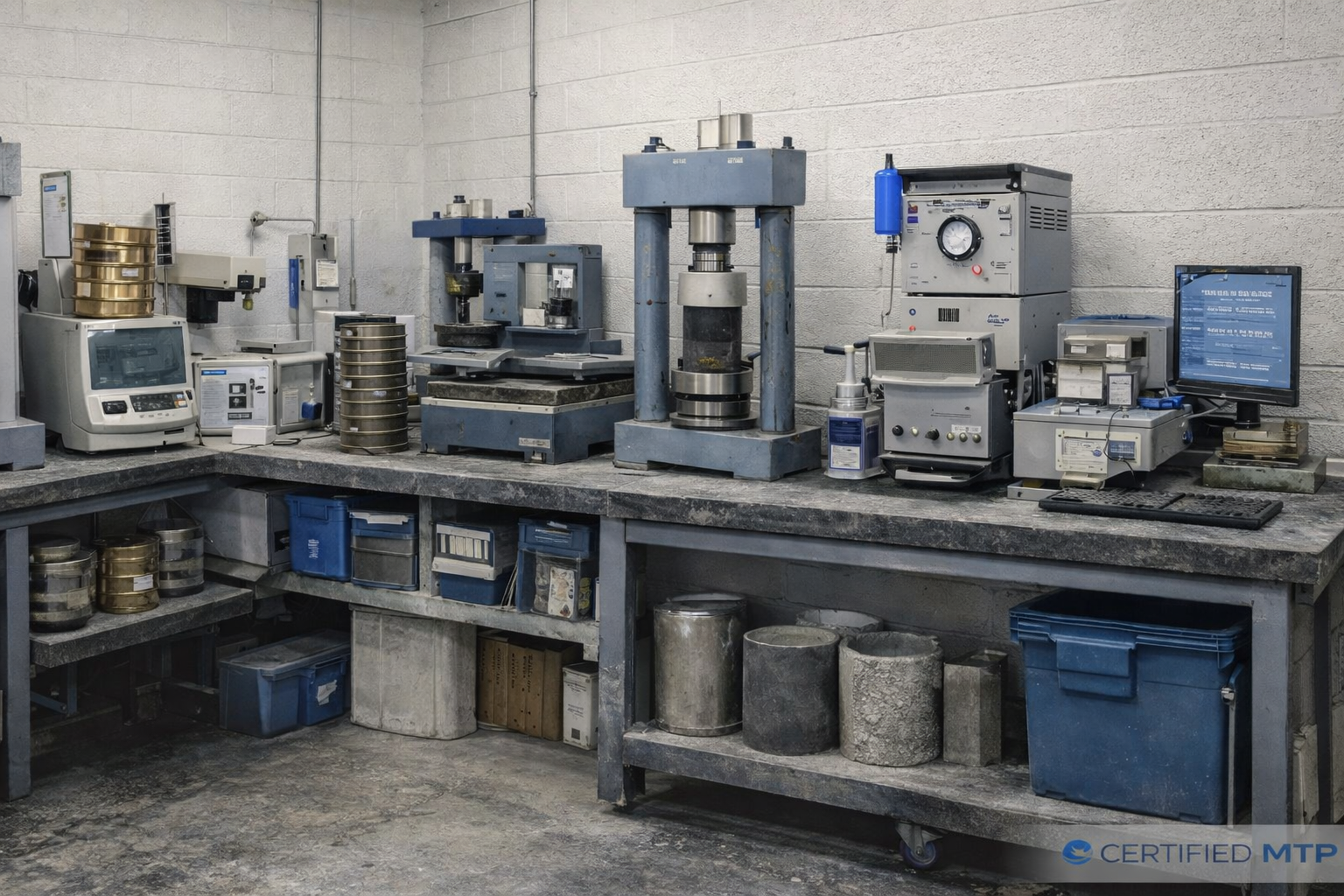
Accurate measurements are the backbone of all laboratory testing.
Scales and Balances
Laboratory balances are used to measure materials for sieve analysis, moisture content determination, and cement proportioning. Even slight inaccuracies can affect final test calculations.
Certified MTP’s aggregate and cement testing guides emphasize consistent weighing techniques to maintain repeatable results.
Graduated Cylinders and Beakers
Used for measuring liquids such as water, admixtures, or slurry components, graduated cylinders ensure volumetric accuracy. These supplies are commonly used in:
- Concrete mix design verification
- Cement consistency tests
- Soil moisture determination
Using properly calibrated glassware helps maintain compliance with testing standards.
Curing & Storage Supplies: Protecting Test Integrity
Once samples are prepared, proper curing and storage are critical to test validity.
Molds and Specimen Containers
Concrete cylinders, cubes, and mortar specimens rely on standardized molds to achieve consistent shape and size. Any deformation or improper mold preparation can affect compressive strength results.
These supplies are directly linked to compressive strength testing procedures discussed across Certified MTP’s cement and concrete testing sections.
Curing Tanks and Moisture Rooms
Maintaining controlled curing conditions ensures that specimens develop strength as expected. Temperature and humidity consistency are essential for comparable results across testing intervals.
Sieving and Aggregate Testing Supplies
Aggregate testing relies heavily on supporting lab supplies to evaluate gradation and cleanliness.
Sieve Sets and Pans
Sieve analysis determines particle size distribution, which directly affects concrete strength and workability. Properly maintained sieves ensure accurate separation of material sizes.
Technicians often pair these tools with procedures outlined in Certified MTP’s aggregate testing resources to ensure consistency.
Brushes and Cleaning Tools
Cleaning sieves after each test prevents buildup that can distort results. Even small retained particles can significantly impact gradation outcomes.
Lab Safety Supplies: Supporting a Controlled Environment
Educational discussions about lab supplies should always include safety considerations.
Personal Protective Equipment (PPE)
Gloves, safety glasses, and dust masks protect technicians from cement dust, aggregates, and chemical exposure during testing and sample preparation.
Spill Trays and Cleanup Supplies
Managing spills promptly prevents contamination and maintains a clean testing environment — a factor often overlooked but critical for long-term lab accuracy.
Proper Maintenance of Laboratory Supplies
Even high-quality lab supplies require routine maintenance to perform correctly.
Best practices include:
- Cleaning tools immediately after use
- Inspecting molds and containers for damage
- Calibrating measurement equipment regularly
- Storing supplies in dry, controlled conditions
Certified MTP frequently highlights the importance of equipment care across its educational blog content, reinforcing that reliable testing depends on both tools and technique.
How Lab Supplies Support Testing Standards
Construction materials testing is governed by standardized procedures, and lab supplies are designed to meet those requirements. Using appropriate supplies ensures alignment with:
- ASTM testing methods
- AASHTO standards
- Project specifications and quality plans
Technicians who understand why each supply is used are better equipped to recognize errors, prevent inconsistencies, and maintain high testing standards.
Final Thoughts: Small Tools, Big Impact

Laboratory supplies may seem secondary compared to major testing machines, but their impact on test accuracy is substantial. From mixing and measuring to curing and storage, these tools form the foundation of every successful materials test.
By understanding the role of essential lab supplies — and using them correctly — construction materials laboratories can ensure reliable data, consistent performance, and confident decision-making throughout the testing process.
For more educational insights into materials testing procedures, lab practices, and industry standards, the Certified MTP blog continues to serve as a valuable resource for professionals at every level.


