


Modern infrastructure depends heavily on asphalt. From highways and urban roads to parking lots and airport runways, asphalt plays a vital role in ensuring smooth, safe, and durable surfaces. However, what truly determines the performance and lifespan of asphalt is not just its composition but how well it is tested before and during use.
Asphalt testing equipment is the backbone of quality control in pavement construction. It ensures that every batch of asphalt meets the required standards, performs under stress, and resists environmental damage. Without proper testing, even high-quality materials can fail prematurely, leading to costly repairs and safety concerns.
This guide explores the importance of asphalt testing, the essential equipment used in the process, and how these tools contribute to long-lasting pavement performance.
Understanding Asphalt and Its Performance Requirements
Asphalt is a carefully engineered mixture of aggregates such as sand, gravel, and crushed stone, combined with a binder known as bitumen. While the composition may seem simple, the performance expectations are far from it. Asphalt must endure constant traffic loads, temperature variations, water exposure, and long-term wear and tear.
To meet these demands, asphalt must possess specific characteristics, including strength, flexibility, durability, and resistance to deformation. These properties cannot be assumed; they must be measured and verified through systematic testing. This is where asphalt testing equipment becomes essential, allowing engineers to analyze every aspect of the material before it is used in construction.
Why Asphalt Testing Is Essential
Testing asphalt is not just a technical requirement; it is a critical step in ensuring safety, efficiency, and cost-effectiveness in construction projects. Proper testing helps identify potential issues early, allowing adjustments to be made before the material is applied on-site.
Through testing, engineers can determine whether the asphalt mix has the right balance of aggregates and binder, whether it can withstand heavy loads, and how it will behave under different environmental conditions. This process significantly reduces the risk of pavement failure, such as cracking, rutting, or stripping.
In addition, asphalt testing ensures compliance with industry standards such as ASTM and AASHTO, which are crucial for maintaining consistency and reliability across projects.
Core Categories of Asphalt Testing Equipment
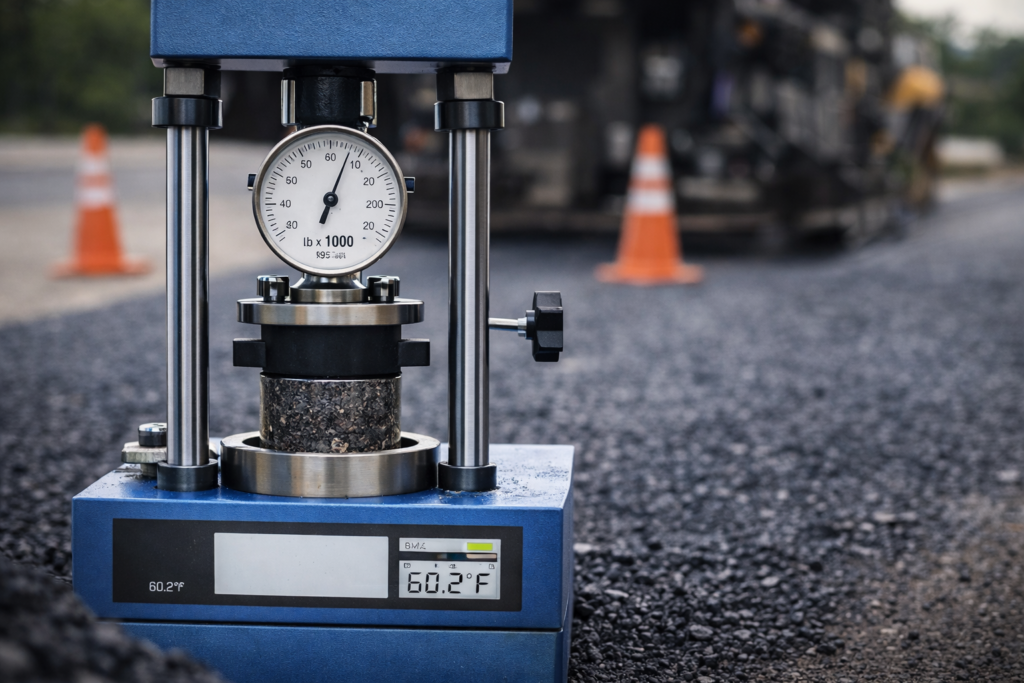
Asphalt testing equipment can be broadly categorized based on what aspect of the material it evaluates. Each category plays a unique role in understanding the overall performance of asphalt.
Asphalt Mix Testing Equipment
Asphalt mix testing focuses on the combined performance of aggregates and binder. One of the most widely used methods in this category is the Marshall Stability Test, which evaluates the strength and flow characteristics of asphalt mixtures.
In this test, a compacted asphalt sample is subjected to increasing load until it fails. The maximum load it can withstand indicates its stability, while the deformation it undergoes provides insights into its flexibility. This information is crucial for determining whether the mix can handle real-world traffic conditions.
Another important tool in mix testing is the Superpave Gyratory Compactor. Unlike traditional methods, this equipment simulates field compaction more accurately, providing detailed data on density and air voids. It is particularly useful for designing high-performance asphalt mixes that meet modern infrastructure demands.
The ignition oven, also known as an asphalt content furnace, is another essential piece of equipment. It works by burning off the binder from a sample, allowing technicians to determine the exact asphalt content. This ensures that the mix has the correct proportions, which directly impacts its durability and performance.
Asphalt Binder Testing Equipment
While the mix as a whole is important, the asphalt binder itself plays a critical role in holding everything together. Binder testing equipment is used to evaluate the physical and rheological properties of bitumen.
The rotational viscometer is commonly used to measure the viscosity of asphalt binder at different temperatures. This helps determine how easily the material can be mixed and applied during construction. If the viscosity is too high or too low, it can lead to compaction issues and reduced performance.
The penetrometer is another key instrument, used to assess the hardness or softness of the binder. By measuring how deeply a needle penetrates the material under controlled conditions, engineers can classify the binder and predict how it will behave under varying temperatures.
Similarly, the ring and ball apparatus is used to determine the softening point of the binder. This indicates the temperature at which the material begins to soften, providing valuable insights into its heat resistance. The ductility testing machine, on the other hand, measures how far the binder can stretch before breaking, which is crucial for preventing cracks in the pavement.
Performance and Durability Testing Equipment
To truly understand how asphalt will perform over time, it must be tested under conditions that simulate real-world use. Performance testing equipment is designed to evaluate how asphalt responds to stress, temperature changes, and environmental factors.
The Dynamic Shear Rheometer is one of the most advanced tools in this category. It measures the viscoelastic properties of asphalt binder, helping engineers assess its resistance to rutting and fatigue. This is particularly important for high-traffic areas where durability is critical.
The Hamburg Wheel Tracker is another valuable tool, used to simulate repeated wheel loading. By applying pressure to asphalt samples in a controlled environment, it helps predict how the pavement will deform over time. This test is especially useful for identifying susceptibility to rutting and moisture damage.
Low-temperature performance is evaluated using the Bending Beam Rheometer, which measures the material’s ability to resist cracking in cold conditions. Together, these tests provide a comprehensive understanding of asphalt performance across different climates and usage scenarios.
Laboratory and Field Testing: A Combined Approach
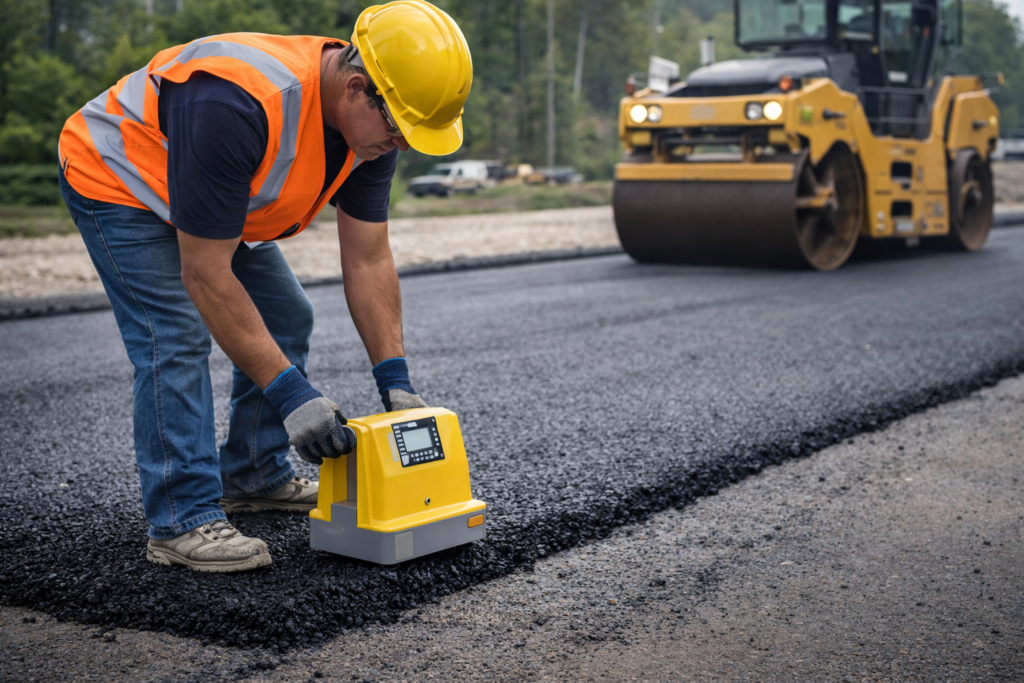
Asphalt testing is conducted both in controlled laboratory settings and directly in the field. Laboratory testing allows for precise analysis of material properties, helping engineers design optimal asphalt mixes before construction begins.
Field testing, on the other hand, focuses on verifying that the asphalt is being applied correctly during construction. Tools such as density gauges and core drilling machines are used to measure compaction and ensure that the pavement meets the required specifications.
This combination of laboratory and field testing creates a comprehensive quality control system, ensuring that asphalt performs as expected from production to application.
Selecting the Right Asphalt Testing Equipment
Choosing the appropriate testing equipment depends on the specific needs of a project. Larger infrastructure projects often require advanced equipment capable of detailed performance analysis, while smaller projects may rely on more basic tools.
Several factors should be considered when selecting equipment:
- The type and scale of the project
- Compliance with industry standards
- Accuracy and reliability of the equipment
- Ease of operation and maintenance
- Long-term cost efficiency
Investing in high-quality equipment not only improves testing accuracy but also reduces the risk of errors, saving time and money in the long run.
The Long-Term Benefits of Asphalt Testing
The value of asphalt testing extends far beyond the construction phase. By ensuring that materials meet the required standards, testing helps create pavements that are more durable, safer, and easier to maintain.
Well-tested asphalt surfaces are less likely to develop cracks, potholes, or other forms of damage. This reduces maintenance costs and extends the lifespan of the pavement, providing significant economic benefits over time.
Moreover, reliable testing contributes to sustainability by minimizing material waste and improving resource efficiency. In an industry where durability and performance are paramount, asphalt testing is an investment that pays off in multiple ways.
Looking Ahead: The Future of Asphalt Testing
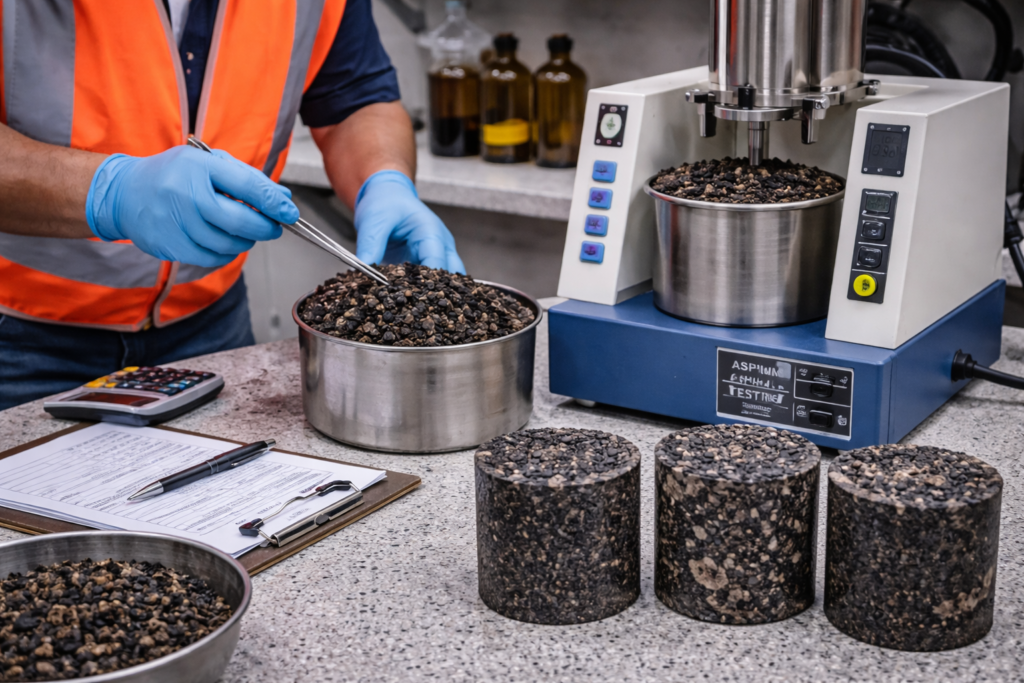
As technology continues to evolve, asphalt testing is becoming more advanced and efficient. Modern equipment now incorporates automation, digital data collection, and high-precision sensors, allowing for faster and more accurate analysis.
Emerging trends such as smart pavements and predictive maintenance systems are set to revolutionize the industry. These innovations will enable real-time monitoring of pavement conditions, helping engineers address issues before they become serious problems.
Conclusion
Asphalt testing equipment plays a crucial role in ensuring the quality, safety, and longevity of modern pavements. By evaluating everything from binder properties to mix performance and long-term durability, these tools provide the insights needed to build reliable infrastructure.
Whether it’s through traditional methods like the Marshall Stability Test or advanced technologies like the Dynamic Shear Rheometer, asphalt testing remains an essential part of the construction process. Investing in the right equipment and testing procedures is not just about meeting standards, it’s about building roads that stand the test of time.


