

Setting up a materials testing laboratory is a major step toward ensuring construction quality, safety, and compliance. Whether you are an engineering firm, contractor, government agency, or private lab, having the right materials testing equipment allows you to verify that concrete, soil, asphalt, and aggregates meet required performance standards.
A properly designed laboratory does more than just run tests. It supports quality control testing, ensures compliance with ASTM standards, reduces project risks, and builds credibility with clients. In this comprehensive guide, we’ll walk through how to plan, equip, and organize a professional testing lab using reliable tools available from Certified MTP.
Understanding the Purpose of a Materials Testing Laboratory

Before purchasing equipment, it is essential to understand what your lab is meant to accomplish. A construction materials testing laboratory verifies that materials used in buildings, highways, bridges, and other infrastructure projects meet design specifications.
Testing helps answer critical questions:
- Is the concrete strong enough?
- Is the soil properly compacted?
- Does the asphalt meet durability standards?
- Are aggregates properly graded?
Without proper testing, material failures can lead to cracks, structural damage, or even collapse. A well-equipped lab ensures that decisions are based on measurable data rather than assumptions.
Certified MTP provides a wide range of materials testing laboratory equipment designed to meet industry standards.
Planning Your Laboratory Layout and Scope
The first practical step in setting up your lab is defining the scope of testing. Will your lab focus only on concrete? Or will it include soil, asphalt, and aggregate testing as well?
Your scope determines:
- Space requirements
- Equipment needs
- Storage systems
- Safety considerations
- Power and ventilation setup
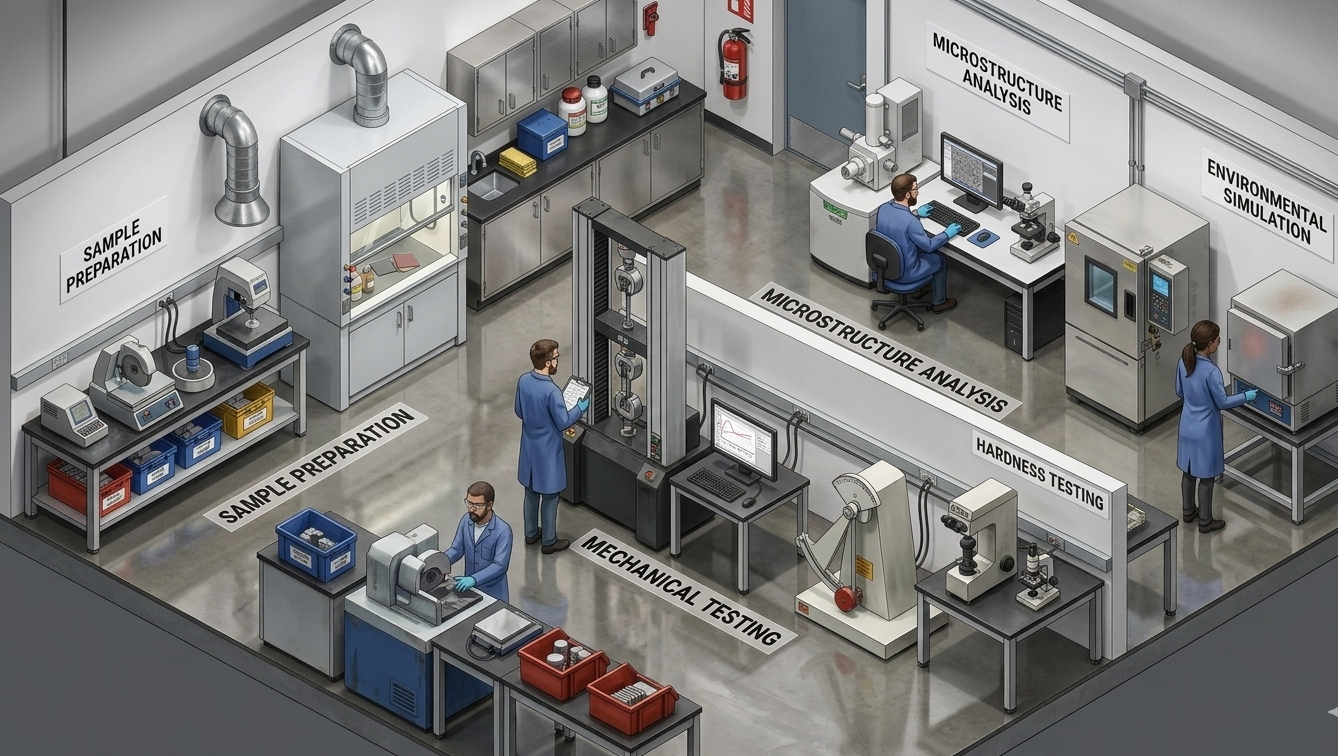
For example, concrete compression testing machines require stable flooring and adequate clearance. Ovens and furnaces require proper ventilation. Soil compactors require heavy-duty work surfaces.
Planning your layout carefully ensures efficiency and safety while preventing overcrowding or workflow interruptions.
Essential Concrete Testing Equipment
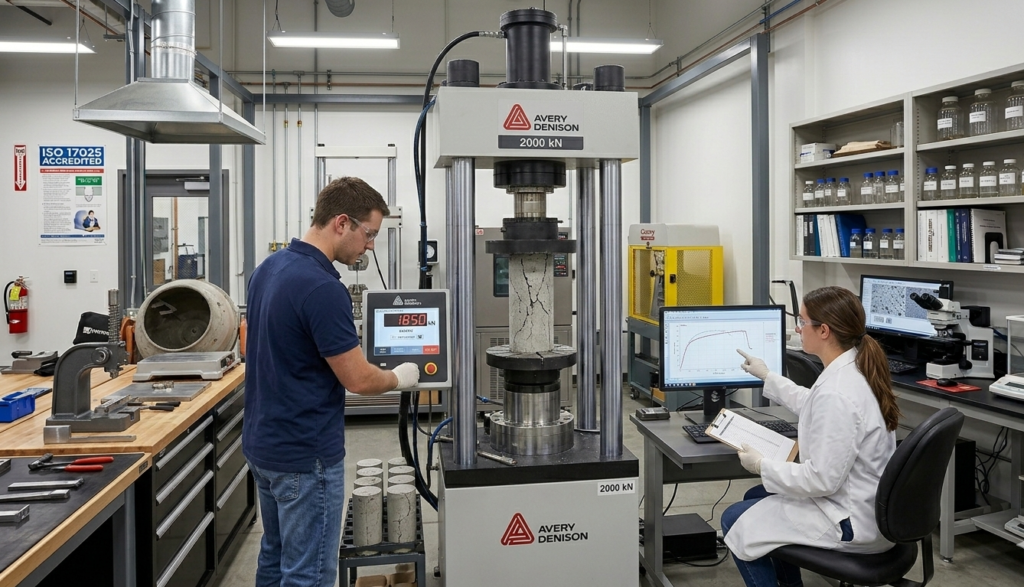
Concrete testing is one of the most common laboratory functions in construction. A reliable concrete testing setup ensures that structural elements meet strength and durability requirements.
A central component of any concrete lab is a compression testing machine. This equipment measures the compressive strength of concrete cylinders and cubes, which is one of the most important indicators of structural performance.
In addition to compression machines, your lab should include concrete cylinder molds, which are used to prepare standardized samples. These molds ensure uniformity in testing and help maintain compliance with ASTM specifications.
To evaluate fresh concrete consistency, slump test equipment is essential. The slump test determines workability and ensures proper mix proportions before pouring.
Concrete samples must also cure properly before strength testing. Investing in reliable curing tanks helps maintain controlled temperature and moisture conditions.
Together, these tools form the foundation of any professional concrete testing laboratory.
Building a Reliable Soil Testing Section
Soil stability directly affects the strength of foundations, pavements, and retaining structures. A properly equipped soil testing area ensures accurate measurement of compaction, moisture content, and density.
One of the most important tests in soil mechanics is the Proctor compaction test, which determines the optimal moisture content for maximum soil density. To perform this test efficiently, you’ll need an automatic soil compactor. Proctor molds are also required to prepare standardized soil samples for compaction testing.Field density testing equipment is used to verify that soil compaction meets project specifications at construction sites. Additionally, accurate moisture measurement is critical for reliable results. You can explore a range of soil testing equipment here.When combined, these tools provide complete support for soil compaction testing and foundation evaluation.
Equipping Your Lab for Asphalt Testing
If your laboratory supports road construction or paving projects, incorporating asphalt testing equipment is essential. Asphalt must meet strict performance standards to ensure long-term pavement durability.
The Marshall Stability Test is widely used to evaluate asphalt mix strength and flow characteristics. In addition, asphalt ovens are necessary for heating and conditioning samples during testing. These tools ensure compliance with pavement quality control requirements and help engineers make informed decisions about material performance.
Aggregate and General Laboratory Equipment
Aggregate testing ensures proper particle size distribution and material quality. Sieve analysis is a key part of this process, requiring high-quality ASTM test sieves and sieve shakers.
Equally important is general lab equipment such as:
- Precision scales for accurate weight measurement
- Laboratory ovens for drying samples
- Moisture analyzers
- Thermometers and data loggers
You can browse complete laboratory testing equipment, these tools support multiple testing categories and enhance overall lab efficiency.
Ensuring Compliance with ASTM Standards
A successful materials testing laboratory setup must prioritize compliance. Equipment should meet relevant ASTM standards, ensuring that test results are legally defensible and industry-accepted.
Using certified equipment from a trusted supplier like Certified MTP reduces risk and improves consistency. Calibration schedules, maintenance procedures, and proper documentation should also be implemented to maintain long-term reliability.
Best Practices for Operating Your Testing Laboratory

Beyond equipment selection, operational procedures play a key role in lab success.
To maintain accuracy:
- Train technicians thoroughly
- Maintain regular calibration schedules
- Keep detailed test records
- Follow standardized testing procedures
- Ensure proper storage of samples
Organized workflow and quality control documentation help maintain professional standards and client confidence.
Conclusion: Building a Strong Foundation for Quality Testing
Setting up a materials testing laboratory requires careful planning, proper equipment selection, and adherence to industry standards. From concrete compression testing machines to soil compaction equipment and asphalt testing tools, each component plays a vital role in ensuring construction quality and safety.
By investing in reliable materials testing equipment from Certified MTP, you establish a foundation of accuracy, compliance, and professional credibility. A well-equipped lab not only protects infrastructure but also strengthens your reputation in the construction industry.
If you’re planning to build or upgrade your testing facility, start by exploring the complete range of equipment at Certified MTP
Frequently Asked Questions (FAQs)
1. What equipment is required to set up a materials testing laboratory?
A complete materials testing laboratory typically requires equipment for concrete, soil, asphalt, and aggregate testing. Essential tools include a compression testing machine, soil compactor, slump test equipment, ASTM test sieves, curing tanks, laboratory ovens, and precision scales.
The exact equipment depends on your testing scope and the standards you need to meet.
2. Why is a compression testing machine important in concrete testing?
A compression testing machine measures the compressive strength of concrete cylinders and cubes. Since compressive strength determines whether concrete can safely support structural loads, this machine is one of the most critical components in any concrete testing laboratory.
Without accurate compression testing, structural reliability cannot be properly verified.
3. What is the purpose of soil compaction testing?
Soil compaction testing determines whether soil has been compacted to the required density for supporting structures or pavements. Tests like the Proctor test help identify optimal moisture content and maximum dry density.
Proper compaction reduces settlement, improves stability, and prevents structural failure.
4. How does asphalt testing improve pavement quality?
Asphalt testing equipment evaluates mix stability, flow, and durability. Tests such as the Marshall Stability Test ensure the asphalt mixture can withstand traffic loads and environmental conditions.
This process helps extend pavement life and reduce maintenance costs.
5. Why are ASTM standards important in materials testing?
ASTM standards provide standardized procedures for testing construction materials. Using equipment that complies with ASTM ensures test results are accurate, repeatable, and legally defensible.
Following these standards protects both contractors and clients by maintaining consistent quality control.
6. How often should laboratory equipment be calibrated?
Calibration frequency depends on the equipment type and usage level. However, most materials testing equipment should be calibrated at least annually or according to manufacturer guidelines.
Regular calibration ensures testing accuracy and prevents costly reporting errors.
7. Can a small laboratory handle multiple types of material testing?
Yes, but it requires proper planning and space organization. Many labs begin with concrete testing equipment and gradually expand into soil testing equipment and asphalt testing equipment as demand increases.
Choosing versatile, high-quality equipment allows small labs to grow without constant replacement costs.


