

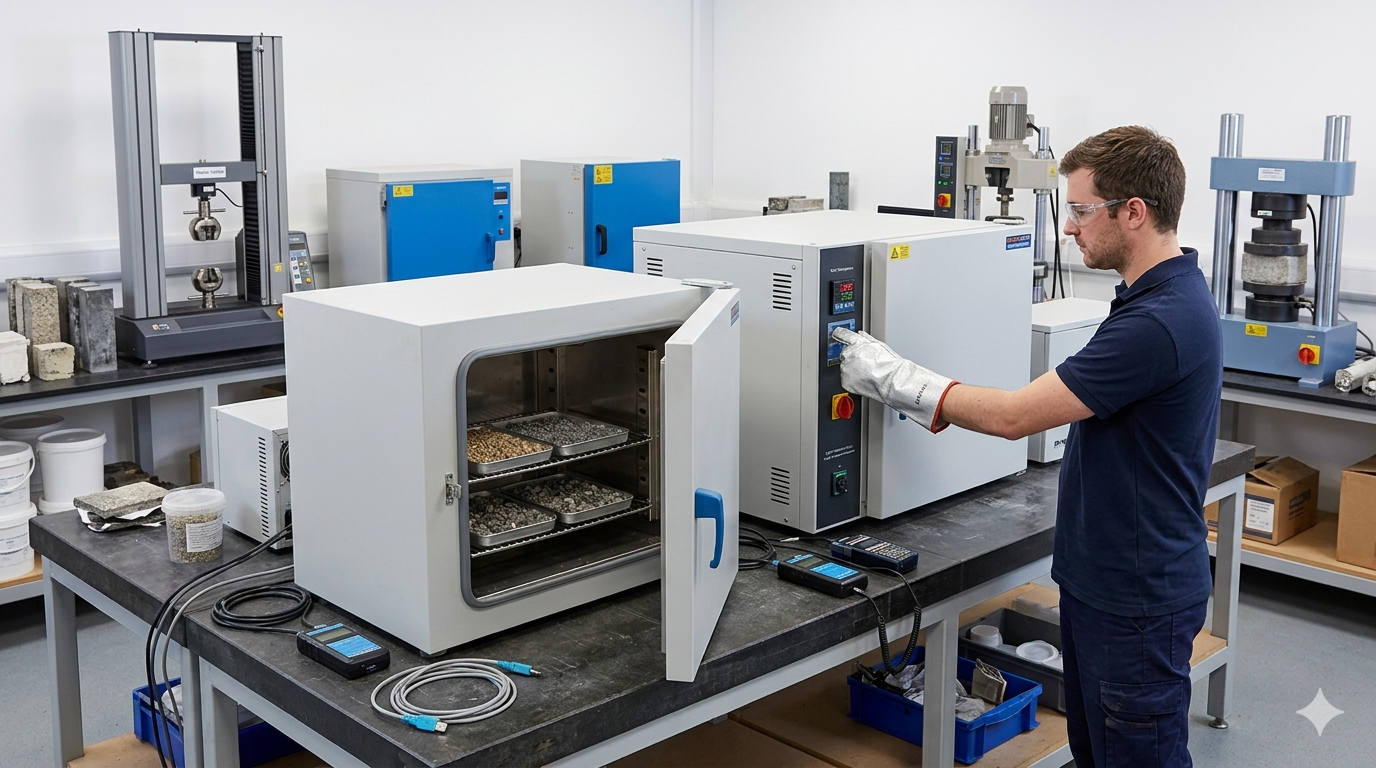
Laboratories involved in materials testing rely heavily on precise equipment to ensure reliable and repeatable results. Among the most essential instruments in these environments is the laboratory oven, a versatile piece of equipment used for controlled heating, drying, sterilizing, and curing of samples. From construction materials testing to chemical and environmental research, laboratory ovens provide the consistent temperature conditions required for accurate analysis.
At facilities like Certified MTP, laboratory ovens are part of a broad range of testing equipment designed to support laboratories performing soil, asphalt, concrete, and aggregate testing. Understanding how laboratory ovens work and why they are important can help labs select the right equipment and achieve dependable results.
What Is a Laboratory Oven?
A laboratory oven, sometimes referred to as a hot air oven, is a specialized heating chamber designed to maintain a controlled temperature for laboratory processes. Unlike household ovens, laboratory ovens are engineered for precise temperature control and uniform heat distribution, making them suitable for scientific and industrial testing environments.
Most laboratory ovens operate within a temperature range of ambient temperature to about 300°C, though specialized high-temperature models may reach even higher levels depending on the application.
These ovens are commonly used in research laboratories, construction materials testing labs, pharmaceuticals, electronics, and environmental studies. Their ability to maintain consistent heating conditions ensures that samples are processed under controlled and repeatable conditions.
Why Laboratory Ovens Are Essential in Materials Testing
In materials testing laboratories, precision is critical. Whether evaluating soil moisture, curing coatings, or conditioning samples, laboratory ovens help create standardized testing conditions.
Laboratory ovens are particularly important in construction materials testing labs because they help ensure that materials meet safety and quality standards. Many test methods such as those used for asphalt, soil, or aggregate require samples to be dried or heated at specific temperatures before measurements are taken.
For example, drying soil samples in an oven removes moisture so technicians can determine the true dry weight of the sample, which is essential for accurate moisture content calculations. Similarly, asphalt and polymer samples may require controlled heating to simulate real-world conditions during testing.
Because of their consistent heating performance, lab ovens help laboratories maintain compliance with industry standards such as ASTM testing procedures.
Common Applications of Laboratory Ovens

Laboratory ovens serve many purposes in modern labs. Their versatility makes them one of the most frequently used pieces of equipment in materials testing and research environments.
1. Drying Samples
One of the most common uses of laboratory ovens is removing moisture from samples. Soil, plant materials, aggregates, and chemical compounds often need to be dried before analysis. Controlled heating ensures that moisture is removed without altering the composition of the sample.
2. Glassware Drying and Sterilization
Laboratories frequently sterilize glassware and equipment using heat. Laboratory ovens can maintain temperatures high enough to destroy bacteria and microorganisms, making them useful for sterilizing tools and containers used in testing.
3. Material Curing
Some materials require controlled heat to cure or harden. For example, adhesives, coatings, and composite materials may be placed in a laboratory oven to achieve the desired chemical or structural properties.
4. Thermal Aging and Conditioning
Laboratory ovens are often used to simulate environmental conditions. Samples may be heated for extended periods to evaluate how materials behave under prolonged exposure to high temperatures.
5. Evaporation and Chemical Processing
In chemistry labs, laboratory ovens help evaporate solvents and accelerate chemical reactions that require consistent heat.
These applications highlight why laboratory ovens are considered essential equipment in many scientific and industrial laboratories.
Types of Laboratory Ovens
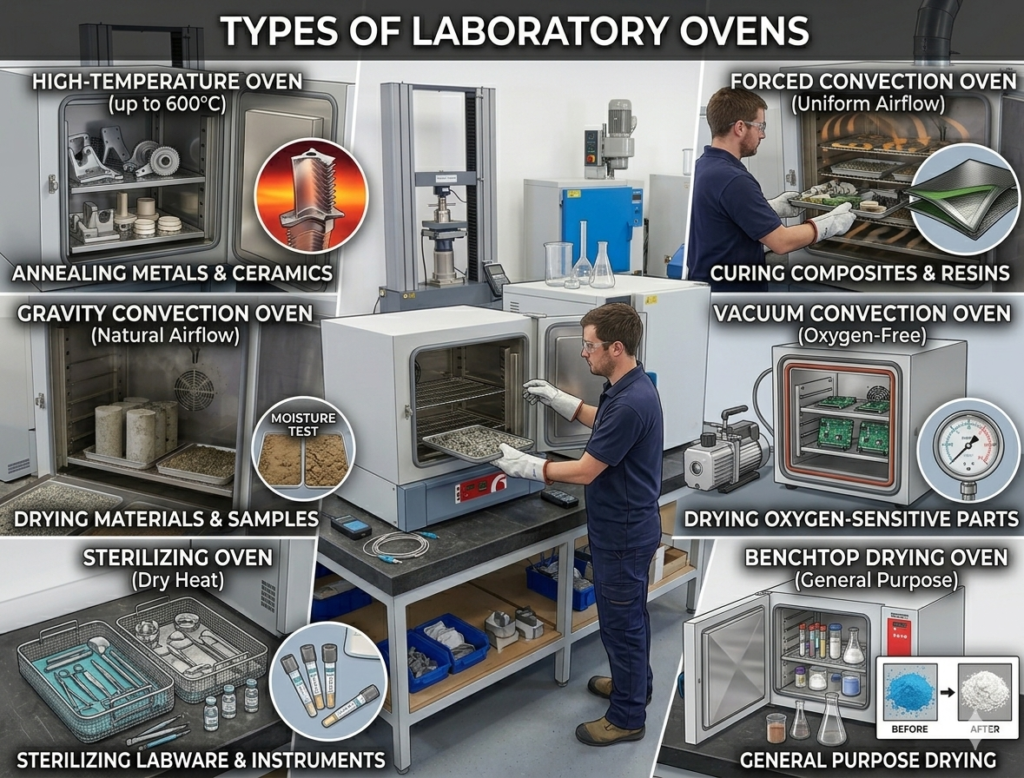
Different types of laboratory ovens are available to suit various testing requirements. Selecting the appropriate oven depends on the type of materials being tested and the precision required.
Gravity Convection Ovens
Gravity convection ovens rely on natural air circulation to distribute heat throughout the chamber. Warm air rises while cooler air sinks, creating a gentle airflow. These ovens are ideal for applications that require minimal air disturbance, such as drying powders or lightweight materials.
Mechanical or Forced Convection Ovens
Forced convection ovens use fans to circulate heated air throughout the chamber. This method provides faster heating and more uniform temperature distribution, making them suitable for applications that demand consistent heating across multiple samples.
Vacuum Ovens
Vacuum ovens remove air from the chamber before heating begins. This allows materials to be dried at lower temperatures and reduces the risk of oxidation or contamination.
High-Temperature Ovens
Some laboratories require ovens capable of extremely high temperatures for processes like annealing or sintering. These ovens feature enhanced insulation and specialized heating elements.
Each type of oven offers unique advantages depending on the laboratory’s testing requirements.
Key Features to Look for in a Laboratory Oven
When selecting a laboratory oven for a testing lab, several important features should be considered.
Temperature Range and Stability
The oven must maintain a stable and accurate temperature across the entire chamber. Even small fluctuations can affect test results.
Uniform Heat Distribution
Uniform airflow ensures that all samples are exposed to the same heating conditions, improving test accuracy.
Safety Features
Laboratory ovens often include over-temperature protection systems that automatically shut down heating if temperatures exceed safe limits.
Durable Construction
High-quality ovens are typically made with stainless steel interiors and corrosion-resistant materials to withstand frequent use.
Programmable Controls
Modern laboratory ovens may include digital controls and programmable settings that allow technicians to automate heating cycles.
Many of these features are incorporated in professional laboratory ovens available through equipment suppliers such as the Certified MTP Lab Ovens collection, which offers models designed specifically for laboratory testing environments.
Best Practices for Using Laboratory Ovens

Using laboratory ovens properly ensures accurate results and safe operation. Laboratories should follow several best practices when operating these instruments.
First, always verify that the oven is calibrated and functioning correctly before beginning an experiment. Temperature sensors and control systems should be regularly inspected.
Second, samples should be placed inside the oven in a way that allows proper airflow. Overloading the oven can prevent uniform heating and lead to inconsistent results.
Third, laboratories should follow recommended safety procedures when working with heated equipment. Protective gear such as gloves and lab coats should be used to prevent burns or injuries.
Finally, routine cleaning and maintenance are essential. Removing residues and contaminants helps maintain accurate temperature control and extends the life of the equipment.
Conclusion
Laboratory ovens are a cornerstone of modern materials testing laboratories. Their ability to provide controlled heating environments makes them essential for drying samples, sterilizing equipment, curing materials, and conducting thermal testing.
From construction materials testing to chemical research, laboratory ovens ensure consistent and reliable results across a wide range of applications. By selecting the right oven and following proper operating procedures, laboratories can improve testing accuracy, maintain safety, and comply with industry standards.
As laboratories continue to advance and testing requirements become more precise, high-quality laboratory ovens such as those available through Certified MTP — will remain an indispensable part of the modern lab environment.
Frequently Asked Questions (FAQs)
What is a laboratory oven used for?
A laboratory oven is used for controlled heating processes such as drying samples, sterilizing equipment, curing materials, and performing thermal testing in laboratory environments.
What temperature do laboratory ovens typically operate at?
Most laboratory ovens operate from slightly above room temperature up to about 300°C, although specialized high-temperature models can exceed this range depending on the application.
What is the difference between a laboratory oven and a field oven?
Laboratory ovens are typically factory-tested and calibrated for precise temperature control, while field ovens may be more portable and less precise for laboratory-grade measurements.
Why are laboratory ovens important in construction materials testing?
Laboratory ovens help remove moisture from samples and condition materials under controlled temperatures, which is essential for accurate testing of soil, asphalt, concrete, and other construction materials.
How do you maintain a laboratory oven?
Regular calibration, cleaning of the interior chamber, inspection of heating elements, and ensuring proper airflow inside the oven are essential for maintaining accurate and safe operation.


