

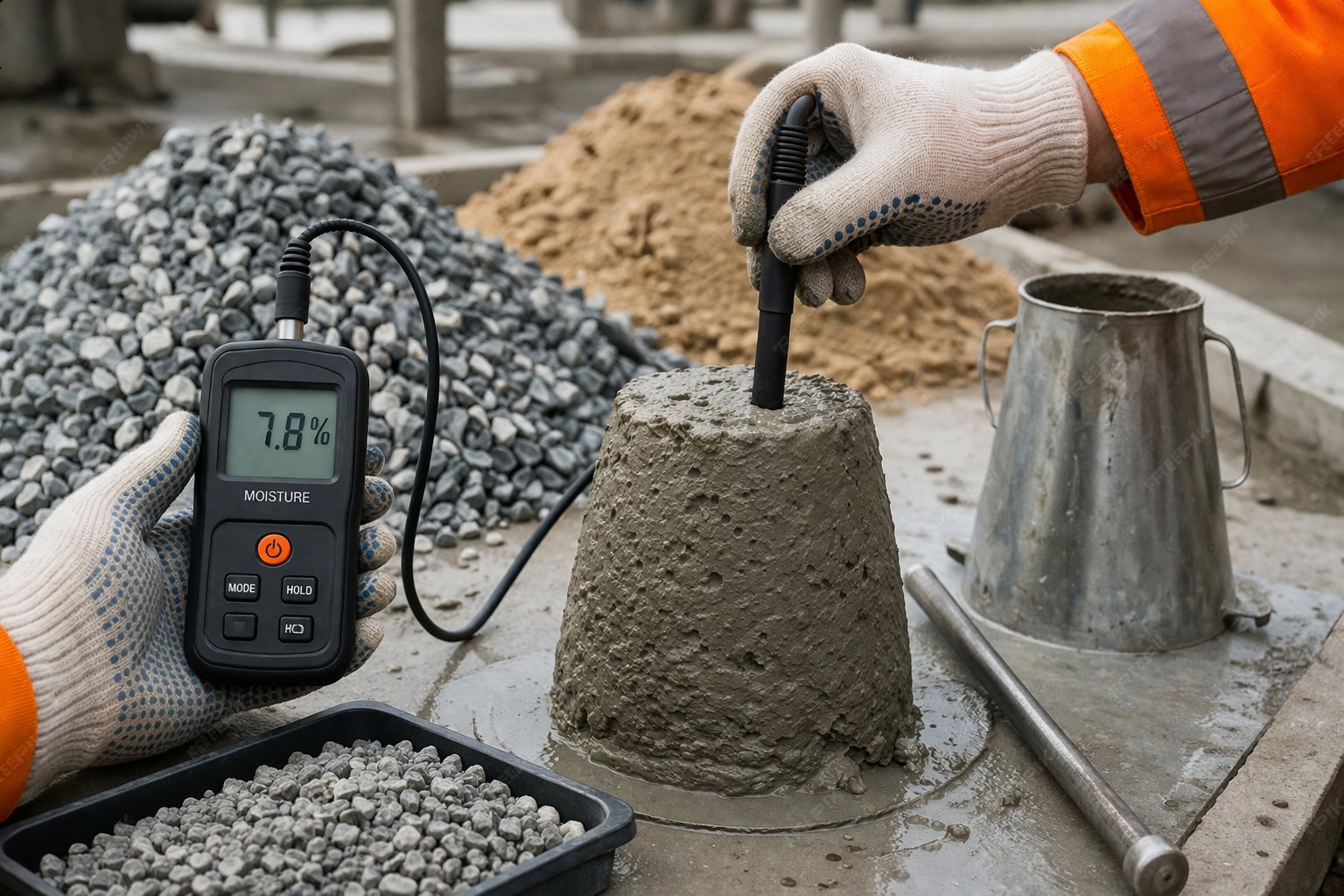
Introduction to Moisture Testing in Construction
In construction, precision begins long before materials are poured or structures are built. One of the most overlooked yet crucial factors in achieving durable and high-performing concrete is the moisture content in concrete and aggregates. Accurate moisture testing plays a vital role in ensuring the correct mix proportions, preventing structural issues, and maintaining overall quality. Without proper testing, even the best materials and designs can result in compromised performance and costly repairs.
The Role of Moisture in Concrete Strength
Concrete is a carefully balanced mixture of cement, water, and aggregates, and the amount of water used directly affects its strength and durability. However, aggregates such as sand and gravel often contain varying levels of moisture. This hidden moisture can significantly alter the water-cement ratio, which is one of the most important factors in determining the strength of concrete. If moisture levels are not accurately measured, the mix may end up either too dry or too wet, leading to weak or inconsistent results.
Impact of Aggregate Moisture on Mix Consistency
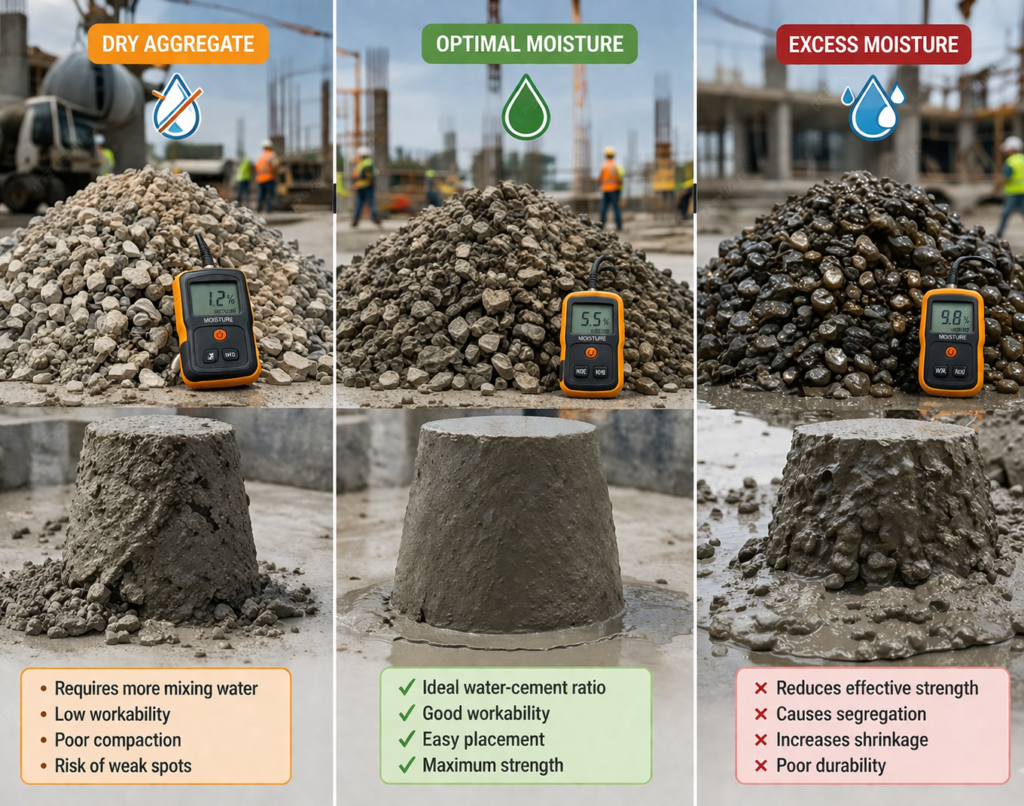
Excess moisture in aggregates can increase the total water content of the mix, reducing strength and causing issues such as cracking, shrinkage, and reduced load-bearing capacity. On the other hand, insufficient moisture can make the concrete difficult to handle, affecting placement and compaction. This is why aggregate moisture testing is essential before construction begins, as it allows contractors to adjust the mix design and maintain consistency across batches.
Environmental Factors Affecting Moisture Levels
Environmental conditions such as rain, humidity, and temperature changes can significantly impact the moisture content of aggregates stored on-site. Without proper moisture content testing, these fluctuations can go unnoticed, leading to unpredictable concrete performance. Regular testing ensures that adjustments can be made in real time, helping maintain the desired concrete workability and strength.
Importance of Moisture Testing for Quality Control
In addition to improving mix accuracy, moisture testing in concrete contributes to better quality control throughout the construction process. By understanding the exact moisture levels in materials, engineers and contractors can ensure compliance with industry standards and specifications. This enhances the reliability of the structure while reducing the risk of failures that could compromise safety.
Types of Moisture Testing Equipment Used in Construction
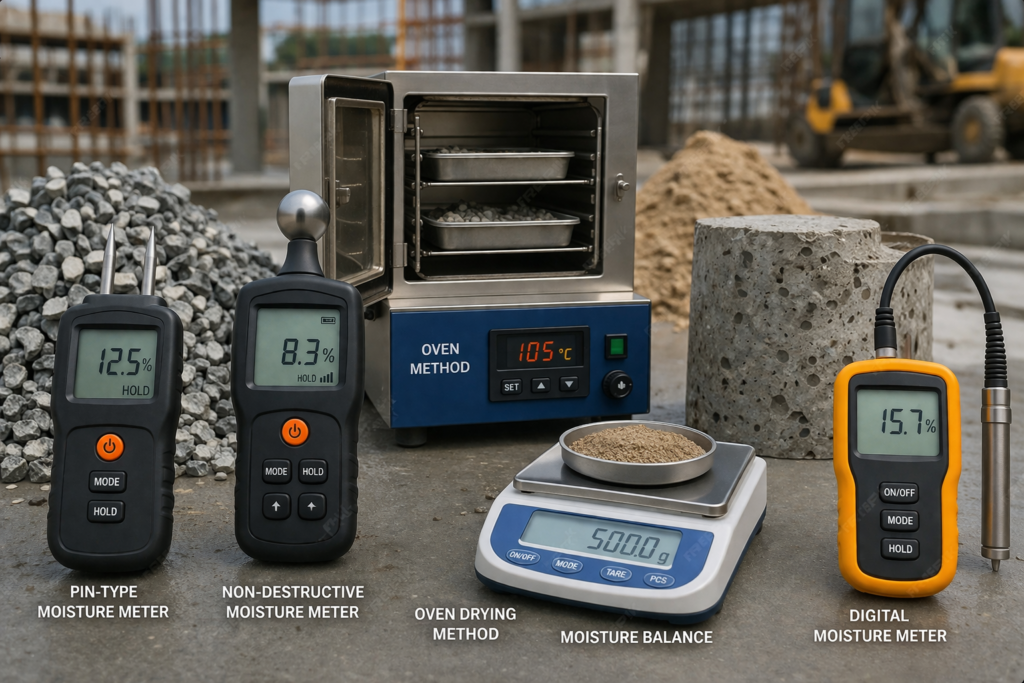
Modern construction relies on a variety of moisture testing equipment to achieve accurate and efficient results. Tools such as moisture meters, oven drying methods, and advanced digital testing devices are commonly used to measure moisture levels in aggregates and concrete materials. These tools provide precise data that helps professionals make informed decisions and maintain consistency in their projects.
Benefits of Using Accurate Material Testing Equipment
Using high-quality material testing equipment is especially important for large-scale projects where even small variations in moisture can have significant impacts. Reliable testing tools allow for quick adjustments, ensuring that the concrete mix meets required specifications at all times. This level of accuracy is essential for achieving long-lasting and structurally sound results.
Cost Efficiency and Risk Reduction
Proper moisture testing in aggregates and concrete also contributes to cost efficiency. Incorrect moisture levels can lead to material waste, rework, and project delays. By investing in accurate construction testing equipment, contractors can minimize these risks and improve overall productivity. This not only saves time and resources but also ensures consistent project outcomes.
Conclusion: Building Stronger Structures with Proper Moisture Testing
Ultimately, moisture testing in concrete and aggregates is a critical step that should never be overlooked. It ensures that the mix design is accurate, the material performs as expected, and the final structure is strong and durable. In an industry where precision and reliability are essential, controlling moisture levels can make a significant difference in project success.
For professionals aiming to achieve the highest standards, using dependable concrete testing equipment is key. Certified MTP offers a wide range of tools designed to support accurate moisture measurement and overall material testing, helping contractors and engineers build with confidence.


