

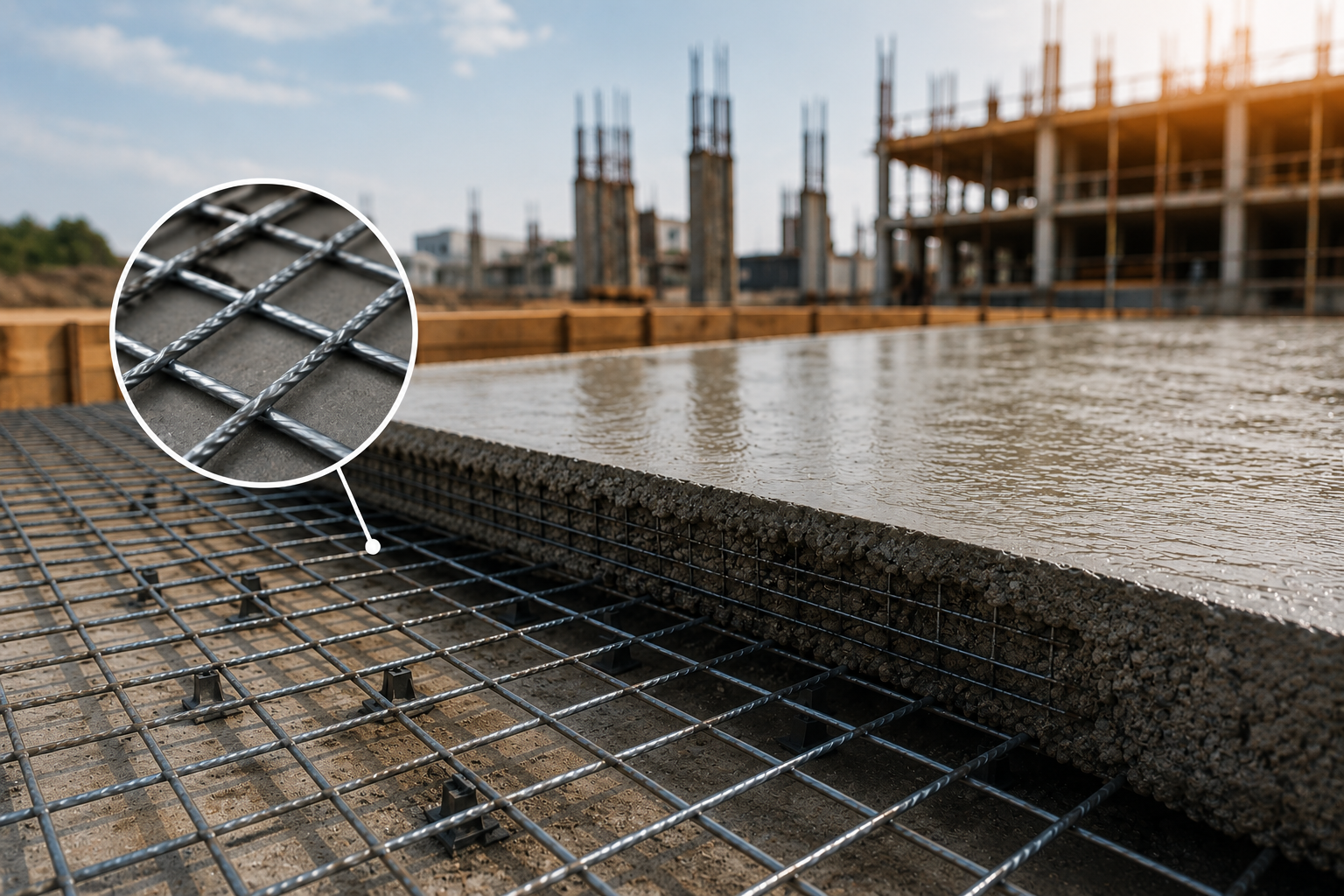
You know that thing people say, “concrete’s basically indestructible”? Heard it a hundred times. It’s not true, not really. Concrete’s strong, don’t get me wrong, but it’s got a blind spot, and most people don’t find out about it until there’s a crack running across their driveway and they’re standing there wondering what happened.
What happened, probably, is this. Concrete’s great when you’re pushing down on it. Stack weight, park a car, build a wall on top, no drama. But stretch it, flex it, ask it to handle tension, and it starts falling apart. Literally. Tension is the thing plain concrete just can’t do well on its own, and nine times out of ten, that’s where the cracking comes from.
Galvanised mesh is the fix for that gap. Not exciting, not something anyone brags about, it’s just sitting under the slab doing its job quietly, which honestly is what you want from reinforcement.
Something like galvanised reinforcement mesh by Sydney Reo, or similar mesh from other reo suppliers, works like this: the steel gets a zinc coating before it goes anywhere near concrete. That coating’s doing two things at once, slowing corrosion, and giving the concrete something to lean on when tension shows up. Two birds, one product.
Okay. Let’s get into the specifics.
Tension: Concrete’s Actual Weakness
Everyone loves talking about how tough concrete is under compression, and fair enough, it is. But tension’s a different story entirely. Ground shifts a bit, temperature swings through the seasons, a heavy vehicle rolls over the same spot too many times, and cracks show up. Small ones, at first. Then bigger. Then water gets in and now you’ve got a second problem stacked right on top of the first one.
Mesh changes that story. It runs right through the slab and becomes part of the concrete itself, so when tension hits, concrete’s not fighting it alone anymore. Stress that would otherwise concentrate in one spot gets spread out across a much bigger area instead. You’ll still get some cracking, that’s just how concrete is, always has been, but it stays small and manageable rather than turning into an actual structural problem down the line.
Slabs under regular vehicle traffic. Walls dealing with shifting soil. Anywhere movement’s a constant thing, that’s where mesh earns its keep the most.
Corrosion Does the Real Damage
Honestly, cracking’s not even the part you should worry about most. It’s what sneaks in afterward. Water finds its way through, gets to the steel underneath, and that’s when rust kicks off. And rust’s a pain because it grows. Once it’s expanding inside the slab, it pushes out against the concrete surrounding it, and that’s usually what does the real damage, working from the inside where nobody can see it happening.
And it’s slow. That’s the annoying part, you usually don’t notice until there’s already real damage done, which means a proper repair job instead of something quick and cheap.
Galvanising gets ahead of it. Zinc sits between the steel and whatever moisture’s trying to get through, so corrosion has to work a lot harder and takes a lot longer to become an actual problem. Not permanent protection, nothing is, but it can add decades to a structure’s life rather than just a handful of years.
Near the coast, somewhere that gets decent rainfall (so, most of the country, at some point in the year), that corrosion resistance alone usually justifies the cost.
You Won’t Stop Every Crack, and That’s Fine
Look, zero cracks was never on the table. Concrete cracks while it cures. It cracks when the seasons turn. Anyone chasing a perfectly smooth, crack-free slab is chasing something that just doesn’t happen in the real world. The actual job is making sure whatever cracks do show up stay tiny and harmless, not letting them grow into something that puts the structure at risk.
This is where mesh quietly does its job. Instead of stress building up in one dramatic spot and splitting wide open, it spreads thin across the whole slab. So when cracks do turn up, and eventually they will, they tend to stay small. Cosmetic. Nothing worth losing sleep over.
Give it a few years and you’ll see it for yourself. Reinforced slabs age slowly, predictably, which, weirdly, is exactly what you want, boring’s good here. Unreinforced ones tend to surprise you. And it’s rarely a pleasant surprise.
Where Does All That Weight Go?
Last point, and it’s an easy one to overlook: load distribution. Park a car on the driveway often enough, roll machinery across a warehouse floor day after day, or just let foot traffic hammer the same stretch of concrete for a year, and something’s got to absorb all that. If there’s no mesh in there, it usually ends up concentrated on whatever bit of the slab is weakest to begin with. That spot goes downhill quick, quicker than most people would guess.
With mesh doing its job properly, that same weight spreads across a much bigger area instead of piling up in one corner or under one repeated wheel path. Wear happens evenly across the whole surface, rather than showing up as an obvious problem spot within a year or two.
Big open surfaces feel this most. Warehouse floors. Driveways. Parking areas. Anywhere uneven wear isn’t just annoying to look at, it’s a maintenance bill somebody’s going to have to deal with sooner or later.
Is It Actually Worth It?
Concrete carries most of the load on any job site, literally, but it needs backup to hold up properly long term. Galvanised mesh covers exactly the spots plain concrete falls short on: tension, corrosion, cracking, uneven wear. Once the slab’s down and finished, nobody’s thinking about the mesh underneath, and that’s kind of the whole point of good reinforcement. It’s not meant to be noticed. It’s meant to keep the thing standing for decades while nobody thinks twice about it.
If there’s a driveway, warehouse floor, or anything else on the horizon that needs to handle real, ongoing pressure, bring it up with your supplier before the pour happens. Cheaper to sort it now than deal with the mess after the first crack shows up. Concrete carries most of the load on any job site, literally, but it needs backup to hold up properly long term. Galvanised mesh covers exactly the spots plain concrete falls short on: tension, corrosion, cracking, uneven wear. Once the slab’s down and finished, nobody’s thinking about the mesh underneath, and that’s kind of the whole point of good reinforcement. It’s not meant to be noticed. It’s meant to keep the thing standing for decades while nobody thinks twice about it.


