

Concrete is the backbone of modern construction, forming the foundation of everything from residential homes and commercial buildings to bridges, highways, and industrial facilities. While selecting the right concrete mix and following proper placement techniques are essential, one critical step often determines whether concrete will achieve its intended strength and durability: concrete curing.
Concrete curing is far more than simply allowing concrete to dry. It is a carefully controlled process that helps the concrete develop strength through proper cement hydration. When curing is done correctly, concrete becomes stronger, more durable, and more resistant to cracking and environmental damage. On the other hand, inadequate curing can compromise an entire project, leading to costly repairs, reduced service life, and structural performance issues.
Whether you’re a contractor, engineer, quality control technician, or construction professional, understanding the importance of proper curing is essential for delivering long-lasting concrete structures.
What Is Concrete Curing?
Concrete curing is the process of maintaining adequate moisture, temperature, and time after freshly placed concrete has been finished. During this period, cement reacts chemically with water in a process known as hydration. This reaction forms calcium silicate hydrate (C-S-H), the compound responsible for giving concrete its strength and durability.
Many people mistakenly believe that concrete hardens simply because it dries. In reality, drying too quickly can actually weaken concrete. Hydration requires sufficient moisture, and if water evaporates before the reaction is complete, the concrete may never reach its designed strength. Proper curing ensures that hydration continues uninterrupted, allowing the concrete to develop the properties it was designed to achieve.
The first few days after placement are particularly important. During this time, the concrete is most vulnerable to moisture loss caused by high temperatures, wind, or low humidity. Protecting the concrete during this early stage significantly improves its long-term performance.
Why Is Concrete Curing So Important?
Proper curing has a direct impact on nearly every performance characteristic of hardened concrete. One of its greatest benefits is improved compressive strength. As hydration continues over time, more cement particles react with water, producing a denser internal structure. Concrete that is cured correctly can achieve substantially higher strength than concrete that is allowed to dry prematurely.
Curing also plays a vital role in reducing cracking. Fresh concrete naturally undergoes shrinkage as moisture evaporates. If this moisture leaves the surface too quickly, plastic shrinkage cracks can develop before the concrete has gained sufficient strength. These early cracks not only affect appearance but can also create pathways for water, chemicals, and chlorides to penetrate the concrete, increasing the risk of long-term deterioration.
Another important advantage of proper curing is improved durability. Well-cured concrete develops a tighter microstructure with fewer interconnected pores. This makes it more resistant to freeze-thaw cycles, abrasion, sulfate attack, and chemical exposure. Structures exposed to harsh weather conditions or heavy traffic particularly benefit from adequate curing because it helps extend their service life while reducing maintenance requirements.
Proper curing also reduces concrete permeability. Lower permeability means less water can penetrate the concrete, helping protect reinforcing steel from corrosion. This is especially important for bridges, parking garages, marine structures, and infrastructure projects where exposure to moisture and deicing salts is common.
In addition to improving structural performance, curing enhances the finished appearance of concrete. Properly cured surfaces are generally harder, smoother, and more resistant to dusting and surface wear, making them ideal for floors, pavements, and industrial slabs.
Common Methods of Concrete Curing
Several curing methods are used throughout the construction industry, and the most appropriate technique often depends on the project size, environmental conditions, and available resources.
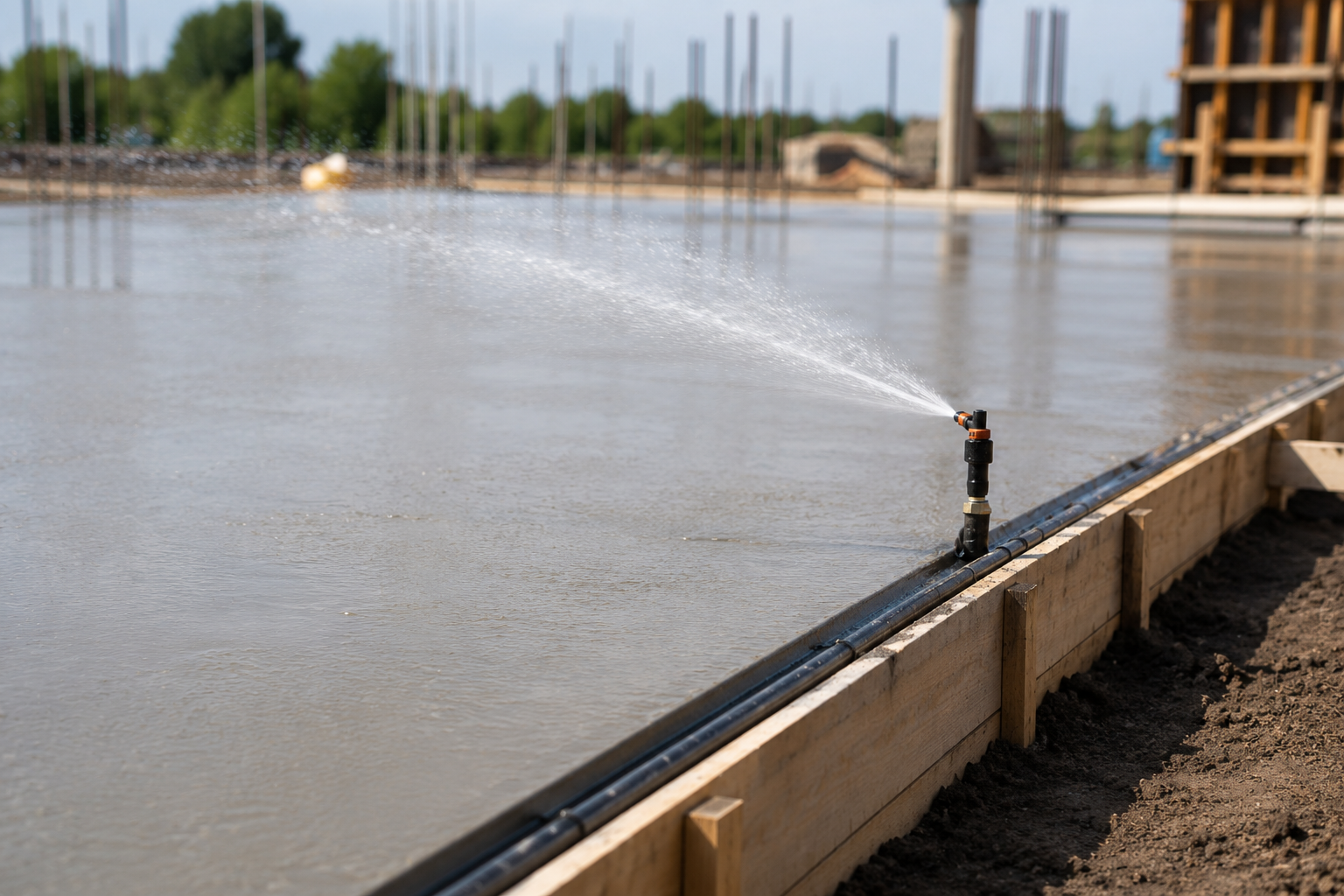
Water curing is widely regarded as one of the most effective methods. By continuously supplying moisture through ponding, sprinkling, wet burlap, or saturated curing blankets, hydration can continue uninterrupted. Although water curing produces excellent results, it requires consistent monitoring and an adequate water supply throughout the curing period.
Another popular approach is the use of curing compounds. These liquid membrane-forming products are sprayed onto freshly finished concrete to reduce moisture evaporation. Membrane curing is commonly used for highways, parking lots, airport pavements, and large industrial slabs because it provides effective moisture retention with relatively little labor.
Plastic sheeting is another simple and economical solution. Polyethylene sheets are placed over the concrete surface to trap moisture and minimize evaporation. When installed correctly, plastic sheeting can provide excellent curing performance, particularly for flatwork and smaller construction projects.
In precast concrete manufacturing, steam curing is frequently used to accelerate strength development. By exposing concrete to elevated temperatures and controlled humidity, manufacturers can reduce production times while achieving the required strength much sooner than conventional curing methods. However, this process requires specialized equipment and carefully controlled conditions.
Some modern concrete mixes also incorporate internal curing, which uses lightweight aggregates or specialized admixtures that slowly release stored water during hydration. This technique is particularly beneficial for high-performance concrete where maintaining internal moisture is essential.
Factors That Influence Successful Concrete Curing
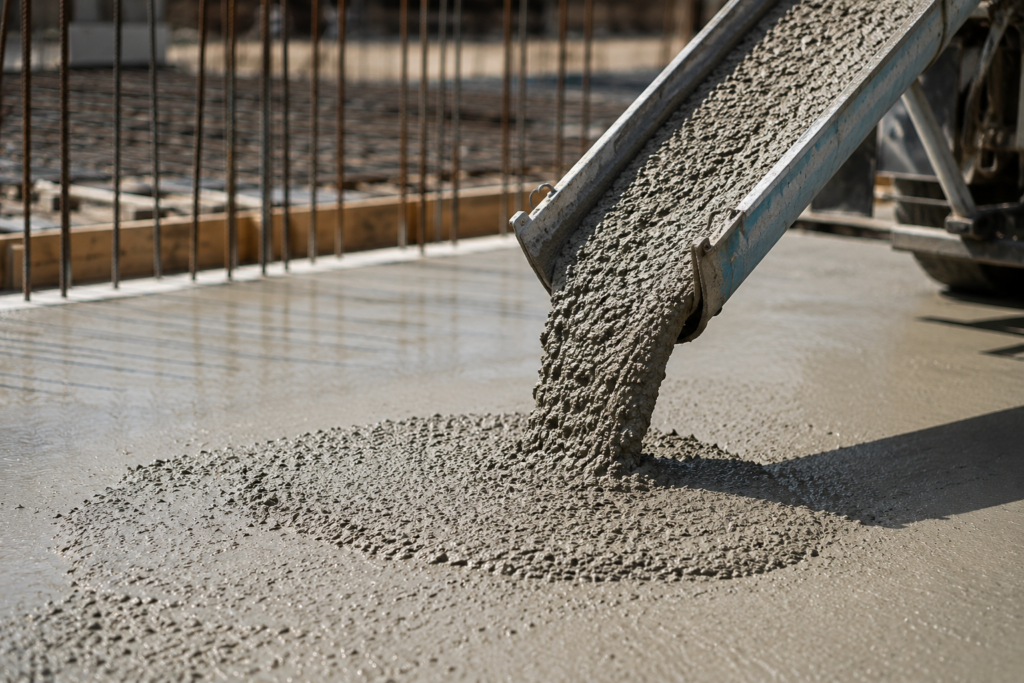
Environmental conditions play a significant role in determining how effectively concrete cures. High temperatures can dramatically increase evaporation rates, causing moisture to leave the concrete before hydration is complete. During hot weather, contractors often begin curing immediately after finishing and may use evaporation retardants or additional moisture protection.
Low humidity presents similar challenges. Dry air accelerates moisture loss from the concrete surface, making continuous curing even more important. Strong winds further increase evaporation and are one of the primary causes of plastic shrinkage cracking during placement.
Cold weather creates a different set of concerns. Low temperatures slow the hydration process, delaying strength development. If concrete freezes before gaining sufficient strength, permanent damage may occur. In these situations, insulated curing blankets or heated enclosures are often used to maintain appropriate curing temperatures.
The concrete mix itself also influences curing requirements. Low water-cement ratio mixes and high-performance concrete generally require more careful curing because they contain less free water available for hydration.
Common Mistakes That Can Compromise Concrete Performance
One of the most common curing mistakes is delaying the curing process after finishing operations are complete. Even a short delay during hot or windy weather can result in rapid moisture loss and early-age cracking.
Another frequent mistake is ending curing too soon. While concrete may appear hard after a few days, hydration continues for much longer. Stopping curing prematurely limits strength development and can reduce long-term durability.
Allowing repeated cycles of drying and rewetting is another issue that affects concrete quality. Consistent moisture conditions are much more effective than intermittent curing, which can interrupt hydration and reduce the overall effectiveness of the curing process.
Ignoring weather conditions is equally problematic. Every project should consider temperature, humidity, and wind speed before placing concrete so that appropriate curing measures can be planned in advance.
The Connection Between Concrete Curing and Quality Control
Concrete curing should never be viewed as an isolated construction activity. Instead, it forms one important part of a comprehensive quality control program that begins before concrete is placed and continues until the structure reaches its design strength.
Before curing begins, construction professionals typically evaluate fresh concrete using tests such as slump, air content, density, and temperature to verify that the mix meets project specifications. After placement, proper curing helps preserve the quality established during these initial tests.
Strength verification is equally important. Concrete compressive strength testing confirms whether cured concrete has achieved its required design strength, while proper curing ensures those test results accurately reflect the concrete’s full potential. Educational resources from Certified MTP also explain procedures for concrete slump testing, air content testing, density testing, and other quality control methods that work alongside proper curing to produce reliable construction results. These resources help construction professionals better understand the complete testing process without focusing solely on specific products.
Best Practices for Effective Concrete Curing
Successful curing begins immediately after finishing operations are complete. Protecting concrete from rapid moisture loss during the first several days is essential for achieving maximum strength and durability. Contractors should select the curing method best suited to the project while considering weather conditions, project size, and available resources.
Maintaining consistent moisture throughout the recommended curing period is equally important. Concrete should be protected from excessive heat, freezing temperatures, direct sunlight, and strong winds whenever possible. Careful planning before placement often makes the curing process more efficient and helps avoid problems that may be difficult or impossible to correct later.
Finally, curing should always be combined with routine quality control testing and compliance with applicable ASTM and ACI standards. Together, these practices help ensure concrete structures meet both performance expectations and long-term durability requirements.
Conclusion
Concrete curing is one of the most important and often most overlooked steps in the construction process. By providing the moisture, temperature, and time needed for proper cement hydration, curing allows concrete to achieve its intended strength, durability, and resistance to environmental damage.
Whether constructing residential foundations, commercial buildings, highways, or industrial facilities, investing in proper curing practices pays significant dividends over the life of the structure. Combined with thorough quality control testing and adherence to industry standards, effective concrete curing helps create safer, longer-lasting, and more reliable concrete infrastructure.


