

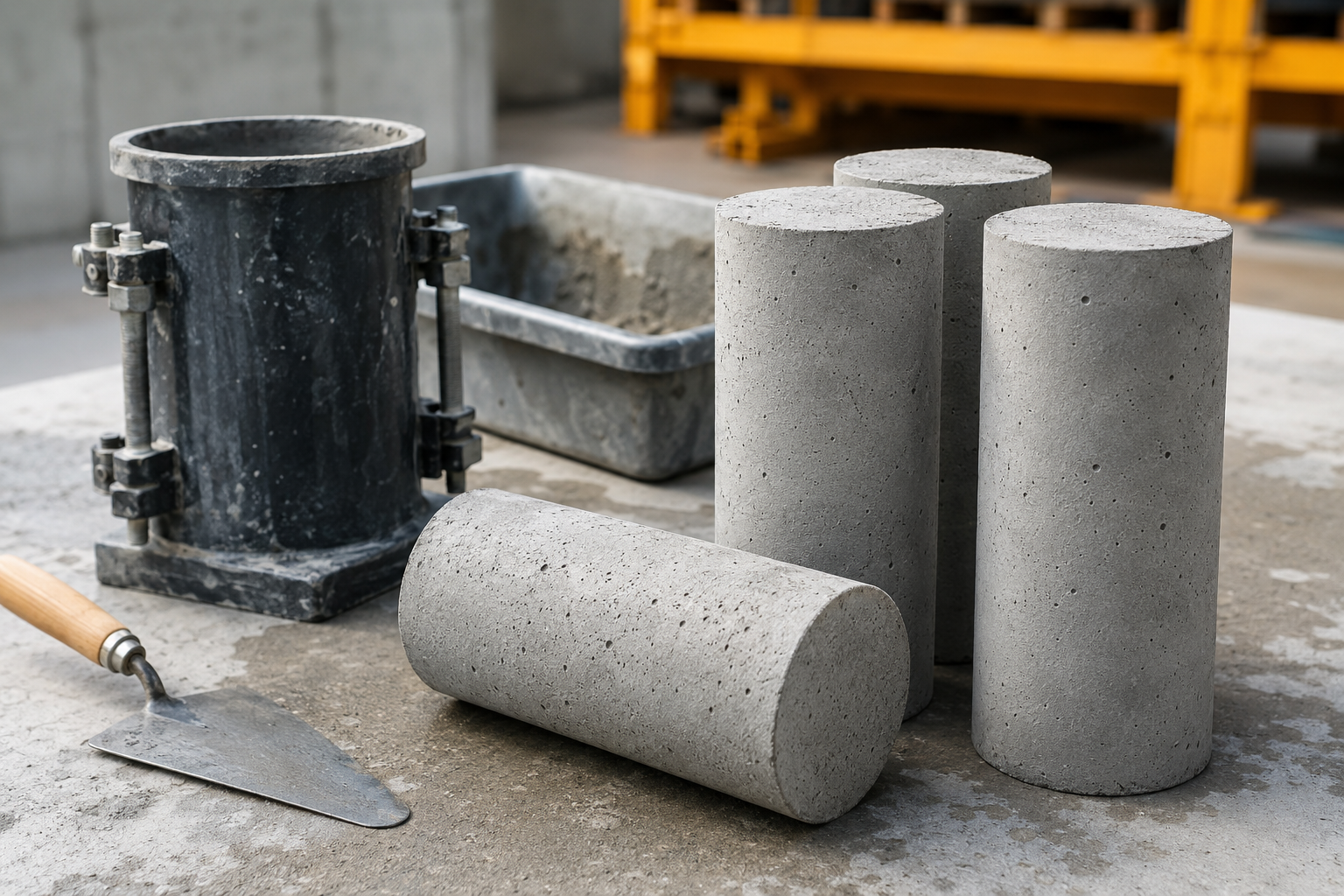
Concrete test cylinders are one of the most important tools used to evaluate the compressive strength and overall quality of concrete. Contractors, engineers, and project owners rely on these specimens to determine whether a concrete mix meets design requirements and project specifications. However, not every failed cylinder indicates poor concrete quality. In many cases, test cylinders can be damaged, improperly handled, or inadequately cured long before they reach the testing laboratory.
When a cylinder fails prematurely, it can lead to costly delays, unnecessary investigations, rejected concrete placements, and disputes among project stakeholders. Understanding the factors that contribute to early cylinder failure is essential for obtaining accurate and reliable test results.
The Purpose of Concrete Test Cylinders
Concrete test cylinders are created from fresh concrete samples collected during placement. These cylinders are cured under controlled conditions and later tested for compressive strength, typically at 7, 14, or 28 days. The results help verify whether the concrete has achieved the required strength specified in the project design.
According to industry standards, proper sampling, molding, curing, transportation, and testing procedures are critical. Even minor deviations can significantly affect test outcomes, making it appear that the concrete is weaker than it actually is.
Professionals often rely on proper field testing procedures outlined in resources such as the Concrete Testing Equipment Guide to ensure consistency throughout the testing process.
Improper Initial Curing Conditions
One of the most common reasons cylinders fail before reaching the laboratory is inadequate initial curing.
Freshly molded cylinders must be protected from temperature extremes, direct sunlight, wind, and vibration. During the first 24 to 48 hours, concrete is highly vulnerable because hydration is still developing.
If cylinders are exposed to excessive heat, cold temperatures, or rapid moisture loss, strength development can be compromised. Even a few hours of improper curing can significantly reduce compressive strength results.
Field technicians often use temperature monitoring practices similar to those discussed in resources about Concrete Temperature Testing to help maintain acceptable curing conditions.
Loss of Moisture During Storage
Concrete gains strength through hydration, a chemical reaction between cement and water. If moisture escapes from the specimen during early curing, hydration slows or stops.
Common causes of moisture loss include:
- Uncovered cylinders
- Loose-fitting lids
- Exposure to dry or windy environments
- Storage in direct sunlight
- Improper curing boxes
When moisture loss occurs, the specimen may develop shrinkage cracks that weaken the cylinder before testing even begins.
Maintaining adequate moisture levels is just as important as controlling temperature. Without proper curing conditions, test results may no longer represent the actual concrete placed in the structure.
Damage During Transportation
Many cylinders are transported from construction sites to testing laboratories within the first 24 to 48 hours after casting. Transportation presents several opportunities for damage.
Fresh concrete cylinders are relatively fragile and can be affected by:
- Excessive vibration
- Rough handling
- Sudden impacts
- Improper stacking
- Vehicle movement over uneven roads
Small cracks created during transport may not always be visible to the naked eye, yet they can significantly reduce compressive strength during testing.
ASTM standards emphasize careful handling throughout the transportation process to prevent unintended damage that could influence results. Proper storage containers and protective transport methods are essential for preserving specimen integrity.
Improper Consolidation During Molding
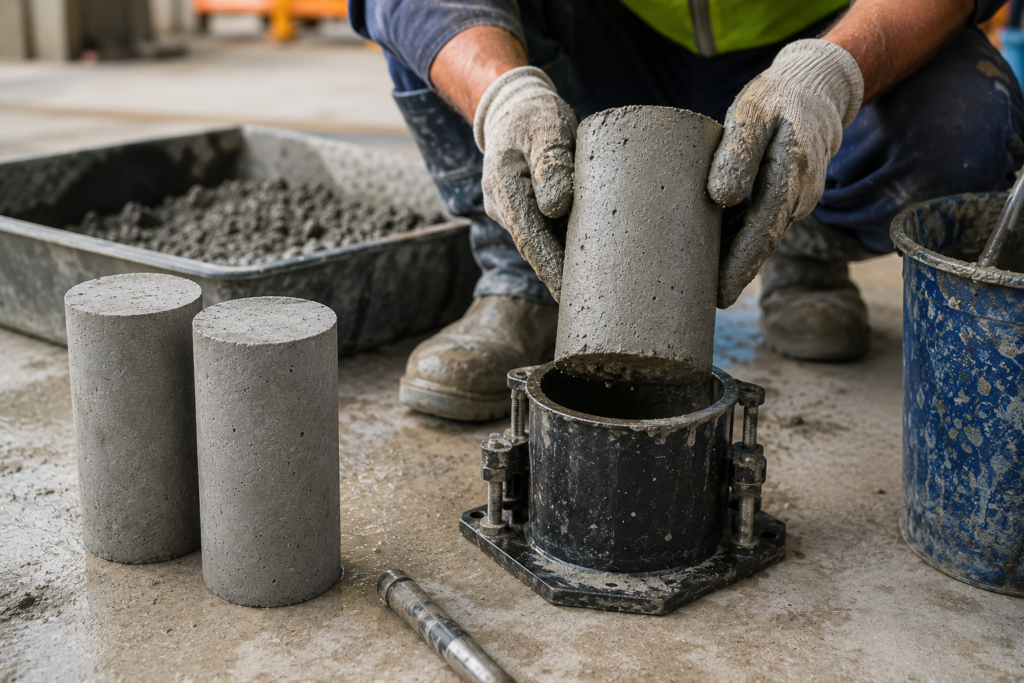
Another major cause of premature cylinder failure originates during specimen preparation.
Concrete cylinders must be consolidated correctly to eliminate air voids and ensure uniform density throughout the sample. Depending on the concrete slump, technicians may use rodding or vibration techniques.
If consolidation is inadequate:
- Excessive air pockets remain trapped
- Honeycombing may occur
- Density decreases
- Strength results become unreliable
Conversely, over-vibration can cause segregation, where coarse aggregate settles and excess paste rises to the surface. This separation can also weaken the specimen.
Proper procedures outlined in Fresh Concrete Testing Resources help technicians avoid these common preparation errors.
Incorrect Cylinder Molds
The quality and condition of cylinder molds play a significant role in specimen performance.
Damaged, deformed, or improperly sized molds can create irregular specimens that do not meet testing requirements. Cracked molds may allow moisture loss, while warped molds can produce cylinders with dimensional inconsistencies.
When specimens do not conform to ASTM standards, stress distribution during compression testing becomes uneven, increasing the likelihood of premature failure.
Using high-quality molds and regularly inspecting equipment helps ensure reliable specimen preparation.
Exposure to Extreme Temperatures
Temperature fluctuations can dramatically affect concrete strength development.
If cylinders are exposed to freezing temperatures shortly after casting, hydration may stop before sufficient strength develops. Ice formation within the concrete can also create internal damage.
On the other hand, excessively high temperatures may accelerate hydration too quickly, producing non-uniform strength development and increased cracking potential.
Construction projects often experience temperature-related challenges during seasonal weather changes. Monitoring environmental conditions and providing insulated curing environments can help protect specimens from these risks.
Improper Identification and Tracking
While identification errors do not physically weaken cylinders, they can create serious testing issues.
Mislabeling specimens may result in:
- Incorrect age testing
- Wrong project assignment
- Inaccurate strength reporting
- Rejected concrete placements
Clear documentation and specimen tracking procedures help ensure that every cylinder is tested according to the correct schedule and project requirements.
Accurate recordkeeping is especially important when multiple pours occur on the same project or when different concrete mixes are being tested simultaneously.
Surface Damage Before Testing
Concrete cylinders can also suffer damage during storage and handling after arrival at the laboratory.
Chipped edges, cracked surfaces, or damaged ends may affect load distribution during compressive strength testing. Since compression testing applies significant force, even minor defects can cause stress concentrations that trigger premature failure.
Proper specimen handling, storage, and preparation are essential to obtaining representative test results.
Human Error During Sampling
Many cylinder failures can ultimately be traced back to simple human error.
Examples include:
- Sampling concrete from the wrong location
- Using improper testing procedures
- Delaying specimen molding
- Failing to protect specimens after casting
- Ignoring curing requirements
Even experienced technicians must follow standardized procedures carefully to ensure consistency and accuracy.
Industry organizations emphasize training and certification because proper sampling techniques directly influence the reliability of strength testing results.
Preventing Premature Cylinder Failures
Preventing early cylinder failure requires attention at every stage of the process:
- Follow ASTM sampling procedures.
- Use clean and properly maintained molds.
- Consolidate specimens correctly.
- Protect cylinders from moisture loss.
- Maintain appropriate curing temperatures.
- Transport specimens carefully.
- Label and track specimens accurately.
- Handle cylinders gently before testing.
When these practices are followed consistently, test cylinders are far more likely to provide an accurate representation of the concrete’s true strength.
Conclusion
A failed concrete test cylinder does not always mean the concrete itself is defective. In many situations, problems arise during sampling, molding, curing, storage, or transportation long before the specimen reaches the testing laboratory. Improper curing, moisture loss, physical damage, temperature exposure, and handling mistakes can all lead to artificially low strength results.
By following established testing standards and implementing proper quality control procedures, contractors and testing professionals can minimize premature cylinder failures and obtain more reliable strength data. Accurate cylinder testing ultimately supports safer construction practices, reduces project disputes, and ensures that concrete structures perform as intended throughout their service life.


