

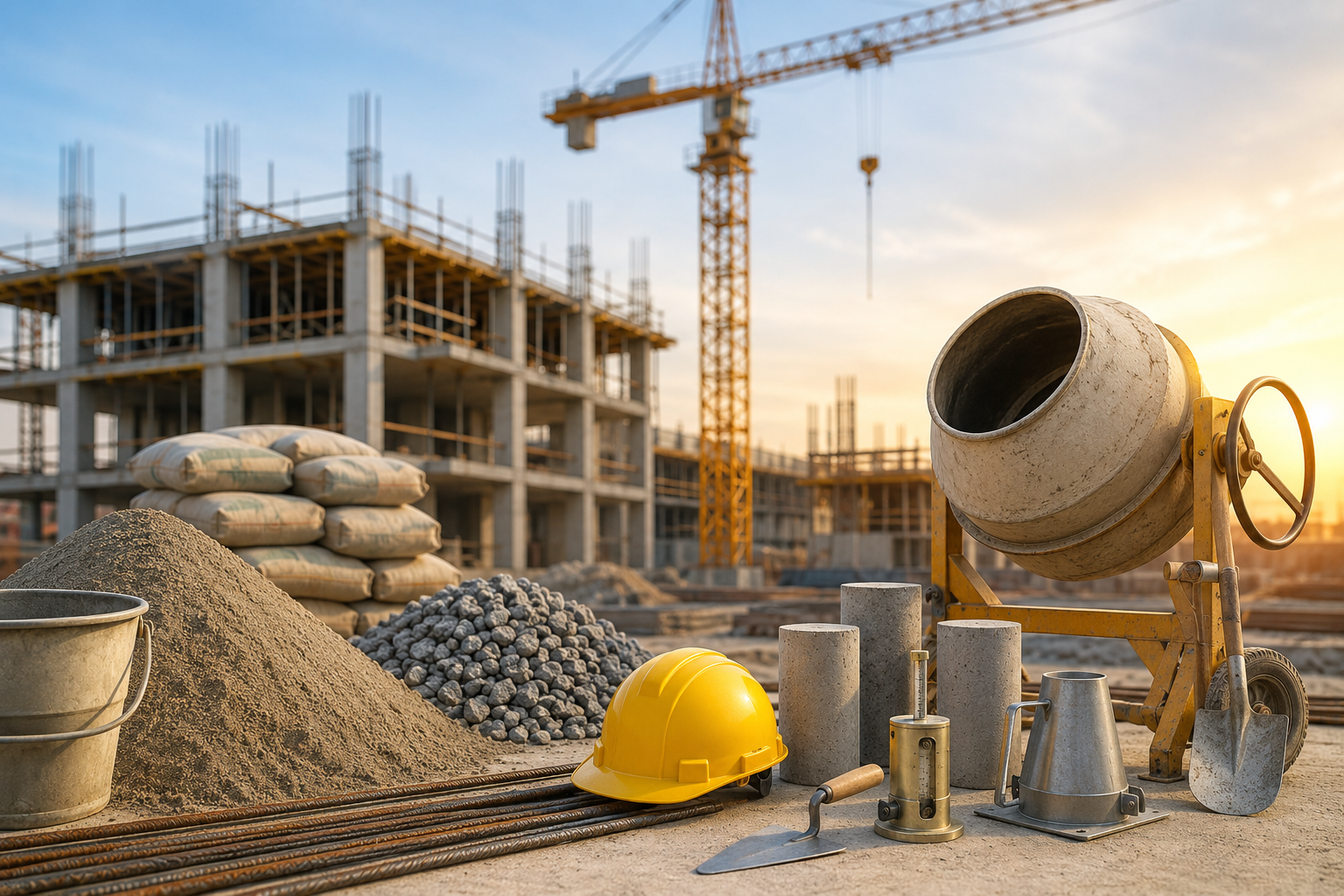
Every successful construction project begins with a solid foundation of quality materials, proper equipment, and proven construction practices. Whether constructing residential buildings, commercial facilities, highways, or industrial structures, the strength and longevity of the final project depend largely on the materials selected and the tools used throughout the construction process.
Poor-quality materials can lead to structural weaknesses, increased maintenance costs, and premature failures. Similarly, inadequate equipment can affect accuracy, productivity, and overall construction quality. By understanding the role of key construction materials and essential equipment, contractors and engineers can achieve stronger, safer, and more durable structures that stand the test of time.
Why Material Quality Matters in Construction
Construction materials form the backbone of every project. The performance of concrete, mortar, asphalt, and other structural components is directly influenced by the quality of their ingredients. When materials meet established industry standards, they provide better load-bearing capacity, improved durability, and greater resistance to environmental conditions.
Quality materials contribute to:
- Increased structural strength
- Enhanced durability and service life
- Better resistance to weather and moisture
- Reduced maintenance and repair costs
- Improved project safety and compliance
To verify material performance, contractors often rely on specialized Concrete Testing Equipment and laboratory testing procedures that ensure materials meet ASTM and AASHTO requirements. Proper testing helps identify issues before they become costly structural problems.
Key Construction Materials for Better Results
1. Cement: The Foundation of Concrete Strength
Cement acts as the binding agent in concrete and mortar. Its quality significantly affects the strength, durability, and workability of concrete mixtures. Ordinary Portland Cement (OPC) grades such as 43 and 53 are commonly used for structural applications due to their reliable compressive strength.
Best practices for cement use include:
- Selecting the appropriate grade for the project
- Storing cement in dry conditions
- Avoiding exposure to moisture
- Verifying compliance with industry standards
Proper cement selection ensures stronger bonding between aggregates and contributes to long-term structural performance.
2. Fine Aggregate: Improving Workability
Fine aggregate, typically natural or manufactured sand, fills the voids between coarse aggregate particles. Clean, well-graded sand enhances workability and reduces segregation in concrete mixes.
High-quality fine aggregate should be:
- Free from excessive clay and silt
- Uniformly graded
- Free from organic contaminants
- Suitable for the intended concrete design
Proper grading improves concrete consistency and helps achieve desired strength levels.
3. Coarse Aggregate: Providing Structural Stability
Coarse aggregates such as crushed stone and gravel provide bulk and strength to concrete. Aggregate quality directly influences compressive strength, durability, and resistance to cracking.
Engineers commonly perform Aggregate Testing Equipment procedures to evaluate particle size distribution, abrasion resistance, and overall material suitability. Accurate particle analysis helps ensure consistent concrete performance.
4. Water: The Often Overlooked Ingredient
Water plays a critical role in the hydration process of cement. While often overlooked, poor-quality water can significantly reduce concrete performance.
Construction professionals should:
- Use clean, potable water
- Avoid water containing oils or chemicals
- Maintain proper water-cement ratios
- Monitor moisture content during mixing
Excessive water can weaken concrete, while insufficient water can affect workability and proper curing.
5. Admixtures: Enhancing Performance
Modern construction frequently utilizes admixtures to improve specific concrete properties. These additives can enhance workability, accelerate setting times, increase durability, and improve resistance to environmental conditions.
Common admixture types include:
- Water reducers
- Superplasticizers
- Air-entraining agents
- Accelerators
- Retarders
Proper dosage and compatibility testing are essential to achieve the desired performance characteristics.
Essential Equipment for Quality Construction
Even the best materials require the right equipment to deliver optimal results. Construction equipment helps ensure proper mixing, placement, compaction, finishing, and quality control.
Concrete Mixers
A uniform concrete mix is essential for achieving consistent strength throughout a structure. Concrete mixers help blend cement, aggregates, water, and admixtures into a homogeneous mixture.
Modern mixers improve:
- Mixing efficiency
- Material consistency
- Productivity
- Quality control
Proper mixing minimizes weak spots and improves overall structural integrity.
Concrete Vibrators
Air pockets trapped within fresh concrete can create voids that weaken structural performance. Concrete vibrators eliminate these pockets through compaction.
Benefits of vibration include:
- Increased concrete density
- Improved bond strength
- Enhanced durability
- Reduced honeycombing
Concrete consolidation is considered one of the most important steps in achieving durable concrete structures.
Power Trowels and Finishing Equipment
Surface finishing affects both appearance and performance. Power trowels create smooth, dense concrete surfaces while improving wear resistance.
These machines are commonly used for:
- Industrial floors
- Warehouses
- Parking structures
- Commercial slabs
Proper finishing reduces surface defects and extends service life.
Concrete Pumps
Large projects often require concrete placement in difficult-to-reach areas. Concrete pumps allow efficient delivery while maintaining mix consistency.
Advantages include:
- Faster placement
- Reduced labor requirements
- Improved accessibility
- Better project efficiency
Pumping technology helps maintain productivity on large-scale construction projects.
The Importance of Construction Testing Equipment
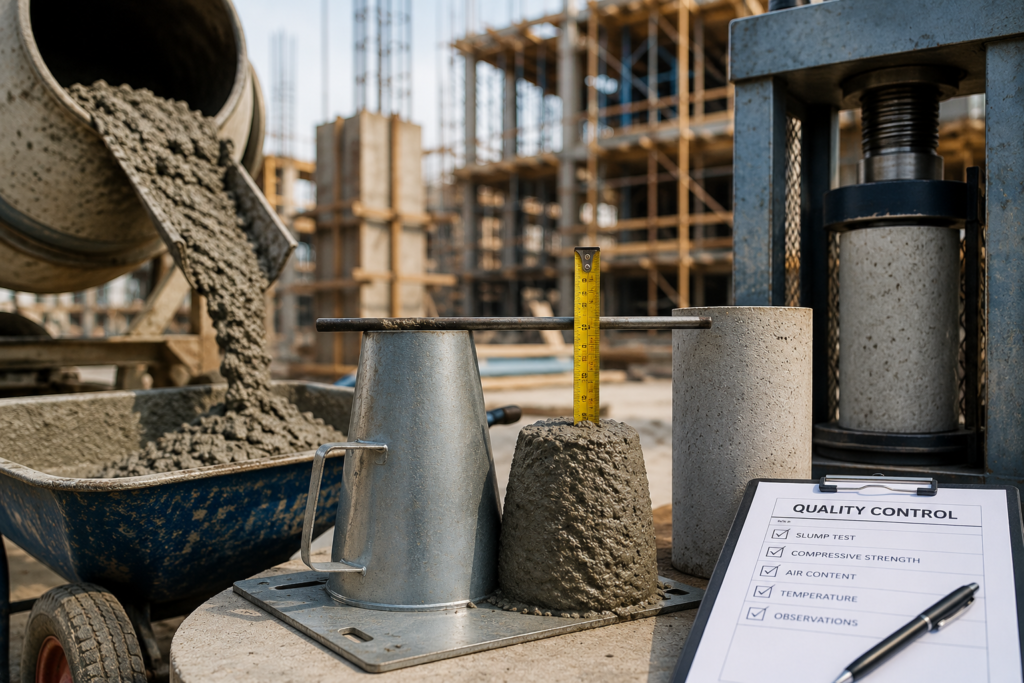
Quality construction does not rely solely on materials and placement techniques. Verification through testing is equally important. Testing equipment helps ensure that materials and finished structures meet project specifications and industry standards.
Construction professionals regularly utilize:
- Compression testing machines
- Slump cones
- Air entrainment meters
- Moisture meters
- Sieve shakers
- Core drilling equipment
A Concrete Compression Testing Machine is one of the most widely used tools for determining compressive strength and structural performance. These machines apply controlled loads until failure, providing valuable insights into concrete quality.
Similarly, a Concrete Slump Test helps evaluate workability and consistency before placement. Slump testing remains one of the most important field quality-control procedures used worldwide.
For air content evaluation, contractors often use Air Entrainment Meters, which help ensure proper freeze-thaw durability in concrete structures.
Meeting ASTM and Industry Standards
Construction projects today are governed by strict quality requirements. ASTM, AASHTO, and ISO standards establish testing procedures that help ensure material consistency and structural safety.
These standards provide:
- Reliable testing methodologies
- Consistent quality benchmarks
- Improved project safety
- Better long-term performance
Using standardized testing equipment and procedures allows engineers and contractors to make informed decisions throughout the construction process. Compliance also reduces the risk of costly failures and repairs later in a project’s lifecycle.
Building Stronger Structures Through Smart Choices
The relationship between quality materials and proper equipment cannot be overstated. Cement, aggregates, water, and admixtures must work together as a balanced system, while construction equipment ensures proper mixing, placement, compaction, and finishing. Testing equipment then verifies that every stage meets established performance requirements.
When builders prioritize material quality, utilize the right equipment, and follow recognized testing standards, they create structures that are stronger, safer, and more durable. These practices not only improve project outcomes but also reduce long-term maintenance costs and increase the overall value of the finished construction.
In today’s competitive construction environment, investing in the right materials and equipment is not simply a best practice, it’s the foundation for building better results.


