

Why Concrete Cracks Should Never Be Ignored: Their Impact, Prevention, and the Importance of Crack Monitoring
Concrete is one of the most durable construction materials ever developed, forming the foundation of bridges, highways, commercial buildings, warehouses, and residential structures around the world. Its ability to withstand tremendous compressive forces makes it an essential component of modern infrastructure. However, despite its strength, concrete is not indestructible. Over time, almost every concrete structure develops cracks, and while some are harmless, others can indicate underlying structural issues that require immediate attention.
The challenge is that not all cracks tell the same story. A small hairline crack today may remain stable for years, or it may gradually expand into a costly structural problem. This is why construction professionals and engineers place significant emphasis on regular inspections and the use of crack monitoring equipment to evaluate movement over time. Understanding why cracks occur and how to monitor them can help extend the lifespan of concrete structures while reducing maintenance costs and improving safety.
Concrete Naturally Wants to Move
Many people assume that concrete is a rigid material that never changes once it hardens. In reality, concrete is constantly responding to environmental conditions and structural loads. During curing, it shrinks as moisture evaporates. Seasonal temperature changes cause it to expand and contract, while settlement of the underlying soil can create additional stresses throughout the structure.
Improper mix designs, inadequate curing practices, excessive loading, or poorly placed reinforcement can all contribute to crack formation. Even when construction follows industry standards, some degree of cracking is considered normal. The real concern is determining whether those cracks are stable or actively growing.
This is why quality control begins long before the concrete is poured. Using reliable construction material testing equipment helps verify that aggregates, cement, and other materials meet project specifications, reducing the likelihood of premature cracking caused by inconsistent material properties.
Small Cracks Can Lead to Bigger Problems
One of the biggest misconceptions in construction is that a small crack is merely cosmetic. While this may be true in some situations, cracks can also create pathways that allow water, chemicals, and contaminants to penetrate deep into the concrete.
Once moisture reaches reinforcing steel, corrosion begins. Rust occupies more volume than steel, creating internal pressure that pushes outward against the surrounding concrete. This often results in additional cracking, delamination, and eventually spalling, where sections of concrete detach from the surface.
The deterioration process tends to accelerate over time. What begins as a narrow crack may eventually require expensive repairs involving reinforcement replacement, structural rehabilitation, or even partial reconstruction. Early detection and monitoring help prevent these minor defects from becoming major liabilities.
Structural Performance Depends on Early Detection
Concrete structures are designed to distribute loads evenly. When cracks develop and continue to widen, stress concentrations can form around damaged areas, reducing the overall efficiency of the structure. Bridges carrying heavy traffic, industrial floors supporting machinery, retaining walls resisting soil pressure, and building foundations all depend on maintaining their structural integrity.
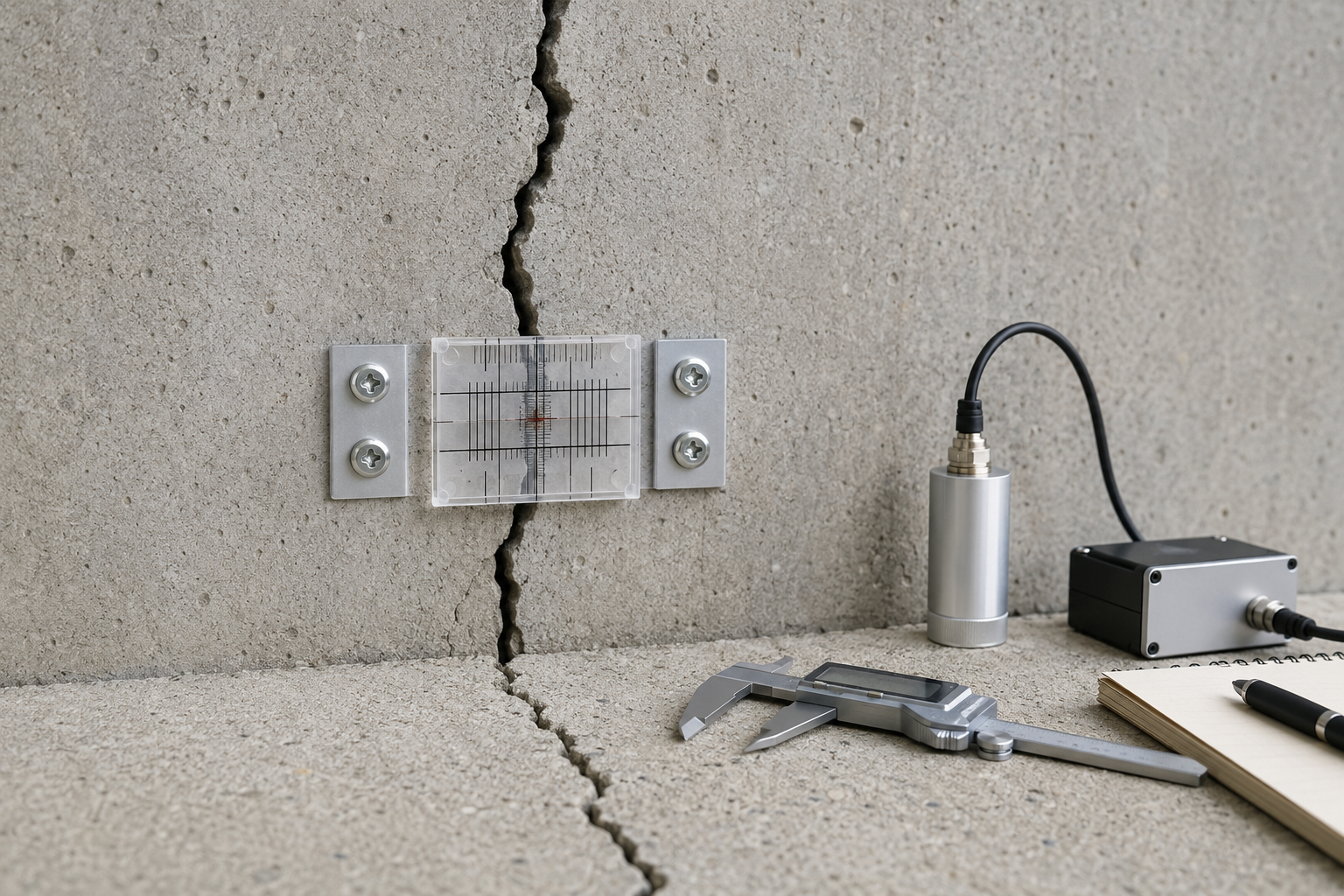
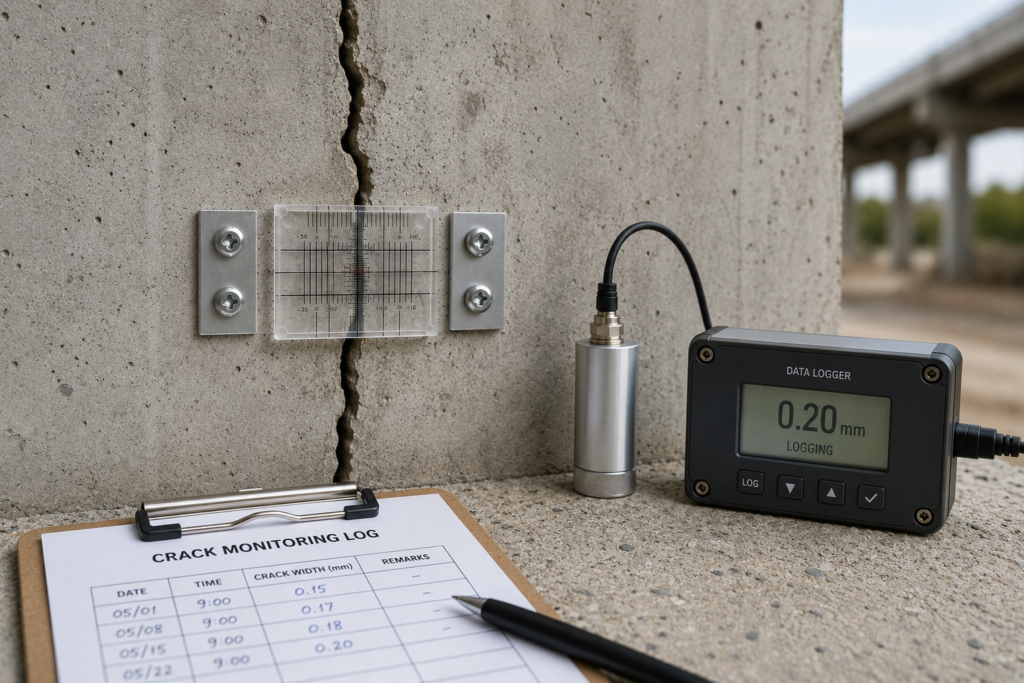
Rather than relying solely on visual inspections, engineers increasingly use specialized monitoring devices to determine whether cracks are changing over time. This data allows maintenance decisions to be based on measurable evidence instead of assumptions.
In many cases, monitoring reveals that a crack has stabilized and requires only periodic observation. In other situations, measurements may indicate ongoing movement that justifies immediate investigation and repair.
Prevention Starts with Proper Construction Practices
Although it is impossible to eliminate every crack, proper planning and construction techniques significantly reduce their occurrence. The quality of raw materials, water content, curing methods, reinforcement placement, and joint design all influence the long-term durability of concrete.
Temperature control during curing is particularly important. Rapid drying or extreme environmental conditions can generate internal stresses that increase the likelihood of shrinkage cracking. Construction teams often rely on accurate temperature measurement instruments to monitor curing conditions and ensure the concrete develops strength under optimal circumstances.
Properly designed expansion and control joints also allow concrete to accommodate natural movement without generating random cracking across slabs and structural elements. Combined with adequate reinforcement and quality workmanship, these practices help maximize service life.
Why Crack Monitoring Matters
Once a crack appears, the most important question becomes whether it is moving. A crack that remains the same width year after year may pose little concern, while one that gradually widens could indicate foundation settlement, thermal movement, or structural distress.
This is where crack monitors provide exceptional value. Installed across a crack, these devices allow engineers and inspectors to record precise measurements over weeks, months, or even years. The collected data helps determine whether movement is occurring and whether repairs are effective after remediation.
For large infrastructure projects, monitoring systems may also include data loggers that automatically collect measurements from multiple sensors. Continuous monitoring reduces manual inspection efforts while providing valuable trend analysis that supports proactive maintenance planning.
Rather than making decisions based on occasional observations, engineers gain objective information that improves both safety and budgeting.
Investing in Monitoring Saves Money
Repairing major structural damage is significantly more expensive than identifying problems early. Regular monitoring allows facility managers and engineers to detect changes before deterioration accelerates, minimizing repair costs and reducing unexpected downtime.
This proactive approach is especially valuable for bridges, parking structures, industrial facilities, airports, retaining walls, tunnels, and commercial buildings where structural performance directly impacts public safety and operational continuity.
By incorporating routine inspections alongside reliable concrete testing equipment and monitoring devices, organizations can make informed maintenance decisions that extend the life of their assets.
Final Thoughts
Concrete cracking is a natural phenomenon, but ignoring those cracks can lead to significant structural and financial consequences. The key is not simply identifying cracks but understanding their behavior over time. Through proper construction practices, routine inspections, and the use of advanced crack monitoring technology, engineers can distinguish harmless surface imperfections from signs of developing structural problems.
Investing in quality testing and monitoring equipment allows construction professionals to detect issues early, protect valuable infrastructure, and ensure that concrete structures remain safe and reliable for decades. In the world of construction, informed decisions are built on accurate measurements and effective crack monitoring provides exactly that.


