

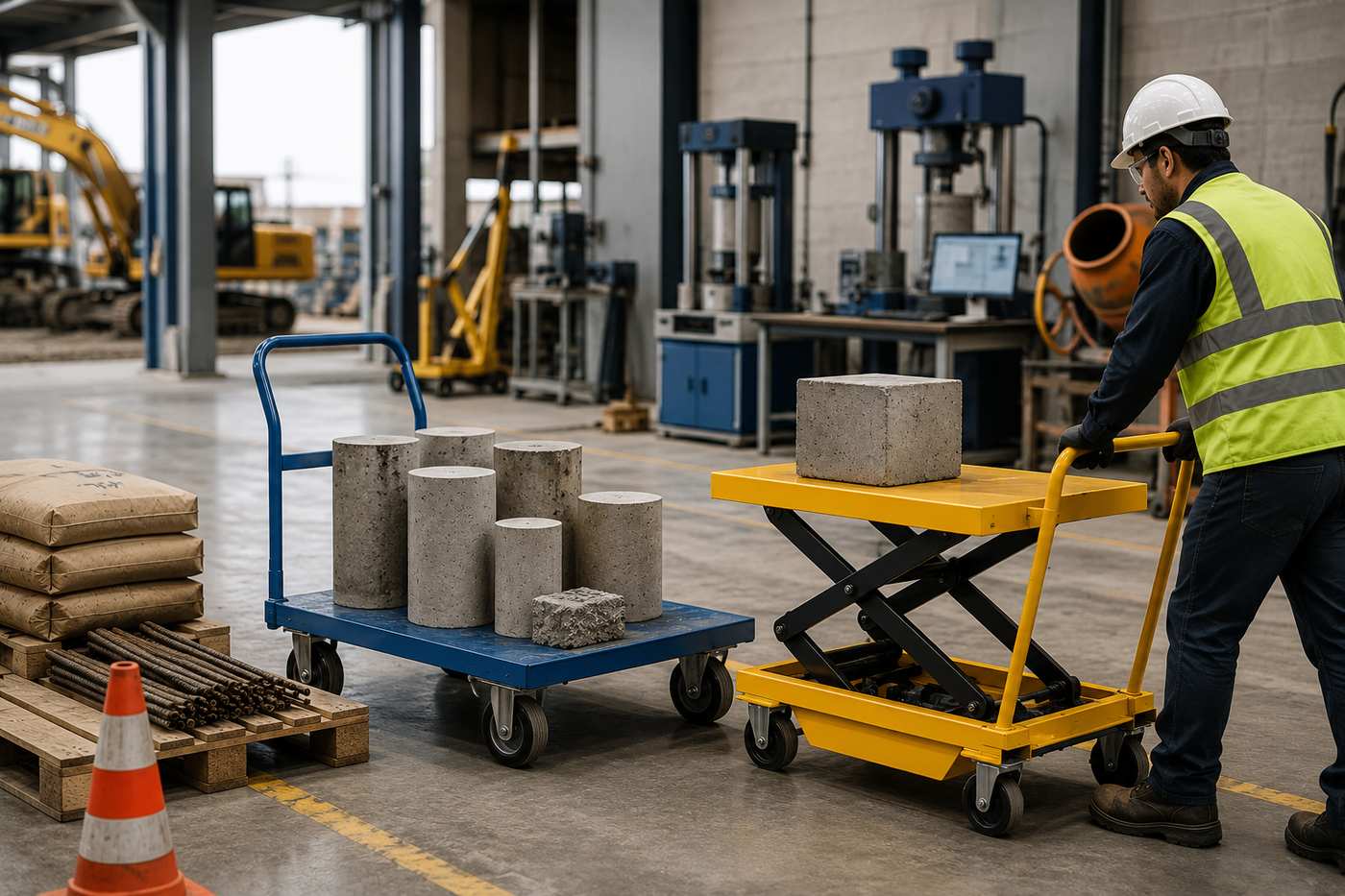
Every day, in the field of construction and material testing, the need for accuracy, productivity, and security is paramount. From the laboratory to the internal transport of test machinery, and even to the handling of heavy components of construction work, the manner in which these activities are carried out, has a direct effect on productivity and working conditions.
Many companies concentrate on the the latest testing equipment and building equipment, but the correct material handling is also crucial. The appropriate handling equipment reduces manual labour, the risk of injury to the workplace, the loss of valuable testing equipment, and keeps projects on schedule. With construction projects demanding ever higher standards and expectations of quality, having a reliable material handling solution is no longer a luxury; it’s a necessity to maintain efficient operations.
Why Material Handling Matters in Construction
All construction projects have the constant shifting of heavy materials, tools and equipment. Cement, steel, testing equipment, aggregates and other materials are routinely moved around the jobsite by workers.
Employees frequently use manual lifting and carrying if they do not have the material handling equipment. This can lead to strains, sprains and other musculoskeletal injuries as well as reduce productivity. Repetitive lifting also can cause fatigue in the worker, which increases the risk for costly mistakes and/or accidents.
Modern material handling equipment can mitigate these risks by safely and efficiently moving materials, while keeping physical strain to a minimum.
Ensure Safe Material Testing Operations
The material testing laboratories are vital role in the construction quality assurance process. These sites regularly move around concrete cylinders, soil samples, asphalt samples, sieves, laboratory equipment and other specialized equipment that requires careful handling during transportation.
Handling can damage the expensive testing equipment or result in a compromise to the integrity of the sample may have an impact on the results of the tests and the project timeline.
Purchasing the right carts and platform trucks, lift tables and other materials handling solutions enable technicians to move materials safely, while keeping the laboratory organized and efficient. It also minimises unnecessary handling, which helps to maintain test specimen and equipment integrity.
Reducing Workplace Injuries
Manual material handling continues to be a major source of work injuries throughout the industrial workplace. Common issues include:
- Injuries from lifting heavy objects
- Any strain to the neck and shoulders.
- Carrying materials in a slippery manner causing slips and falls.
- Injuries to the hands and wrists from repetitive activities
These risks can be greatly reduced if employers establish correct handling procedures and provide workers with the proper equipment used for safe load transportation.
Correct training of workers in the use of material handling equipment is also important. A safe work environment is achieved through safe operating practices, routine inspections and proper load management.
Improving Operational Efficiency
Construction and testing work is carried out efficiently, with the movement of materials kept to a minimum. By saving time in manually moving equipment, employees are free to do more of the higher-value work like testing, inspection, installation and quality control.
Properly designed material handling systems also assist:
- Minimize the need for unnecessary trips between facilities
- Improve workflow organization
- Minimize downtime
- Increase productivity
- Ensure that valuable equipment is not damaged by accident.
Over time, simple enhancements can make a big difference in the efficiency of the project.
How to select the right equipment
There are a number of different jobs and they need different handling solutions. The use of equipment should be based on the nature of the materials to be transported, the amount of movement space available, the size of load to be moved, and how often the load will be moved.
Platform trucks, lift tables, pallet handling solutions and utility carts can help deliver a range of benefits for many warehouses, laboratories and industrial facilities, including streamlined daily operations and better safety for workers.
A safe lift platform truck can be used to get workers up and down safely to access elevated work areas, complementing the ground based material handling equipment to maintain overall productivity and safety.
Safe lifting, carrying and handling practices
Equipment investments are just part of an effective safety strategy. There should also be clear material handling procedures in place at the organization.
The following are a few suggested best practices:
- Provide training on correct lifting techniques and operation of lifting equipment.
- Regularly inspect carts, trucks and lifting equipment.
- Clean and clear walkways.
- Do not exceed recommended loads.
- Place items that are used often in convenient places.
- Arrange for preventive maintenance for handling equipment.
- Promptly report equipment damage by workers.
These can make a big effect on the number of incidents in the workplace and the life expectancy of equipment.
Long-Term Benefits
Employers who invest in good material handling practices may reap other rewards as well as improved safety. As a result of improved workflows, labour costs are lowered, equipment life is extended, product damage is reduced and project delivery is more consistent.
Organized material handling helps to ensure more reliable testing procedures and proper protection of sensitive instruments for testing laboratories. In construction settings, it can help workers operate more efficiently while upholding safety guidelines.
Reliable material handling solutions offer a competitive benefit to ensure projects stay on time and on budget, while maintaining high production and quality standards.
Conclusion
Safe and effective construction and testing activities depend on proper material handling. Whether you’re safeguarding expensive lab apparatus or minimizing jobsite accidents and boosting on-the-job productivity, the proper way of handling equipment delivers real results at every phase of a project.
With the right material handling equipment and effective training and safety protocols, companies can establish a safer workplace, boost efficiency, and keep up industry expectations for quality work in the construction and testing sector.


