

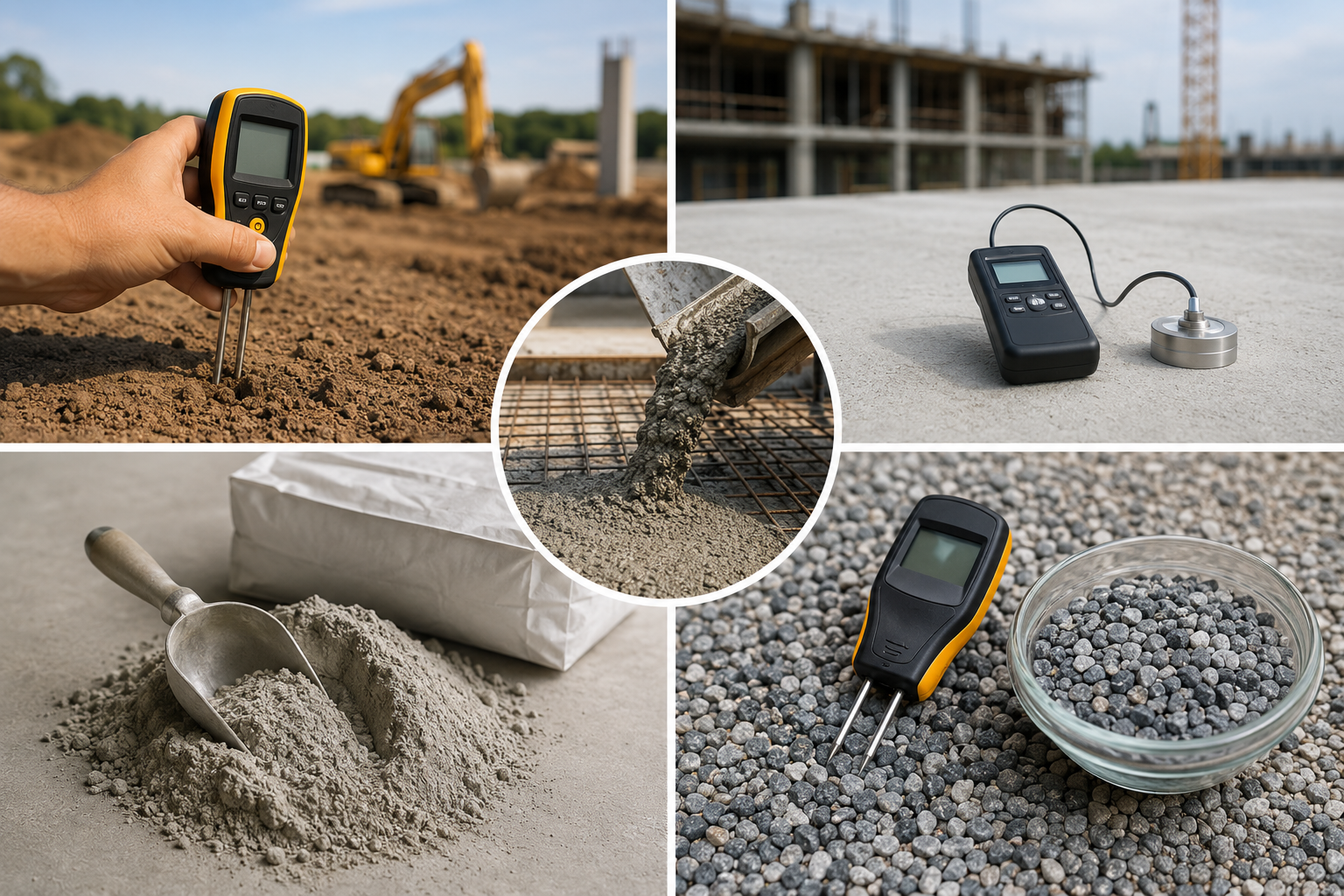
In the construction industry, the quality and longevity of a structure depend on numerous factors, and one of the most important but often overlooked is moisture content. Whether constructing highways, commercial buildings, bridges, or residential developments, controlling moisture in construction materials is essential for achieving strength, durability, and long-term performance. Excessive moisture can weaken materials, while insufficient moisture can prevent them from performing as intended. For this reason, moisture testing has become a critical component of quality control programs across modern construction projects.
Moisture affects nearly every material used on a construction site. Soil requires the proper moisture level to achieve maximum compaction and stability. Concrete relies on controlled moisture during curing to develop its design strength. Cement must be protected from moisture during storage to prevent deterioration, while aggregates require continuous moisture monitoring to ensure accurate mix proportions. Without proper moisture testing, contractors risk structural deficiencies, project delays, costly rework, and premature failures.
The Importance of Moisture Control in Construction
Water plays a vital role in construction processes, but maintaining the correct balance is essential. Too much moisture or too little can significantly impact material behavior and structural performance. Moisture influences compaction, hydration, workability, strength development, and overall durability. Even slight variations in moisture content can alter the performance of construction materials and affect the quality of the finished project.
Modern construction projects place significant emphasis on moisture management because it helps ensure that materials meet project specifications and comply with industry standards. Accurate moisture measurements enable engineers and contractors to make informed decisions, optimize material usage, and maintain consistent quality throughout the construction process.
Why Soil Moisture Testing Is Essential
Every successful construction project begins with a stable foundation, and soil moisture plays a major role in foundation performance. Soil that contains too much water may become soft, unstable, and unable to support structural loads effectively. Conversely, soil that is excessively dry can be difficult to compact, resulting in inadequate density and poor load-bearing capacity.
Geotechnical engineers routinely perform soil moisture testing to determine whether soil is at or near its optimum moisture content before compaction begins. Achieving optimum moisture allows contractors to maximize soil density, improve stability, and reduce the likelihood of settlement issues after construction is complete.
Failure to properly control soil moisture can lead to numerous problems, including foundation movement, pavement cracking, differential settlement, and even structural failure. This is particularly important for infrastructure projects such as roads, airfields, retaining walls, and large commercial developments where long-term performance depends heavily on soil conditions.
Various testing methods are available for measuring soil moisture, including oven drying, speedy moisture testers, nuclear density gauges, and digital moisture meters. These tools help construction teams quickly evaluate field conditions and make necessary adjustments before compaction operations proceed.
The Role of Moisture Testing in Concrete Performance
Concrete is one of the most widely used construction materials in the world, and moisture has a direct impact on nearly every stage of its lifecycle. From initial batching and placement to curing and long-term service performance, controlling moisture is essential for producing strong, durable concrete.
The water-cement ratio is among the most important factors influencing concrete strength. Excess water in a concrete mixture can increase porosity, reduce compressive strength, and make the concrete more susceptible to cracking and deterioration. On the other hand, insufficient moisture during curing can prevent complete cement hydration, limiting strength development and shortening the lifespan of the structure.
Moisture testing is also critical before installing flooring systems, coatings, adhesives, and sealants. Concrete slabs that retain excessive moisture can cause flooring failures, adhesive breakdown, blistering, and delamination. As a result, contractors frequently perform moisture assessments before finishing operations begin.
Common methods used to evaluate concrete moisture include in-situ relative humidity testing, calcium chloride testing, and electronic moisture meters. These techniques help ensure that concrete has reached acceptable moisture levels and is ready for subsequent construction activities.
Why Cement Must Be Protected from Moisture
Cement is highly sensitive to moisture exposure, even before it is incorporated into a concrete mixture. When cement absorbs moisture during storage, it may begin hydrating prematurely, leading to caking, lump formation, and reduced performance.
Moisture-damaged cement often exhibits lower strength, inconsistent setting characteristics, and reduced workability. In severe cases, contaminated cement may become completely unusable, resulting in material waste and additional project costs.
Proper storage practices are essential for preserving cement quality. Cement should always be stored in dry, well-ventilated areas and protected from rain, humidity, and ground moisture. Regular inspections and inventory rotation further help ensure that stored materials remain in optimal condition.
By monitoring storage conditions and minimizing moisture exposure, contractors can maintain cement quality and ensure reliable concrete production throughout the project.
The Impact of Aggregate Moisture on Concrete Mix Design
Aggregates account for approximately 60 to 75 percent of concrete volume, making their moisture content extremely important. Changes in aggregate moisture can significantly affect the water-cement ratio, workability, slump, and overall consistency of concrete mixtures.
For example, if aggregates contain more moisture than anticipated, additional water may inadvertently enter the concrete mix. This excess water can alter mix proportions and reduce concrete strength. Conversely, dry aggregates may absorb water from the mixture, decreasing workability and making placement more difficult.
Because aggregate moisture conditions frequently change due to weather and storage practices, continuous testing is essential. Batch plant operators routinely measure aggregate moisture and adjust water additions accordingly to maintain consistent concrete quality.
Moisture measurements are commonly performed using oven drying methods, moisture analyzers, and digital moisture probes. Accurate aggregate testing ensures that concrete mixtures remain within design specifications and perform as expected.
Moisture Testing Supports Quality Control and Long-Term Durability
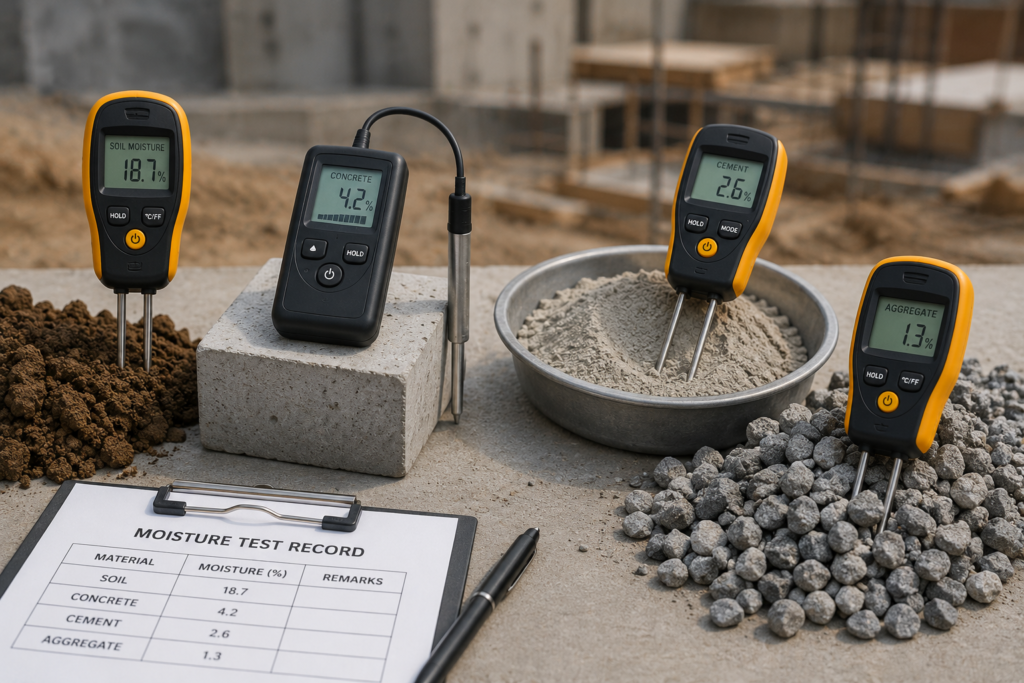
Moisture testing is not simply a laboratory procedure; it is an essential quality assurance practice that directly influences construction success. Accurate moisture measurements help contractors reduce material waste, prevent costly failures, improve productivity, and ensure compliance with project requirements.
Routine moisture testing also contributes to long-term durability by minimizing problems such as cracking, settlement, poor bonding, shrinkage, and premature deterioration. By identifying moisture-related issues early, construction teams can take corrective action before defects become significant and expensive.
As construction standards continue to evolve, moisture testing will remain a critical component of modern quality control programs. Reliable moisture data enables engineers, inspectors, and contractors to make informed decisions that ultimately result in safer, stronger, and more durable structures.
Conclusion
Moisture testing plays an indispensable role in construction quality control. From soil compaction and concrete curing to cement storage and aggregate management, proper moisture monitoring ensures that materials perform as intended and meet project specifications.
By implementing regular moisture testing practices and utilizing accurate material testing equipment, construction professionals can reduce risk, improve efficiency, and enhance the long-term performance of their projects. In an industry where precision and reliability are paramount, effective moisture control remains one of the most valuable tools for building successful and durable infrastructure.


