

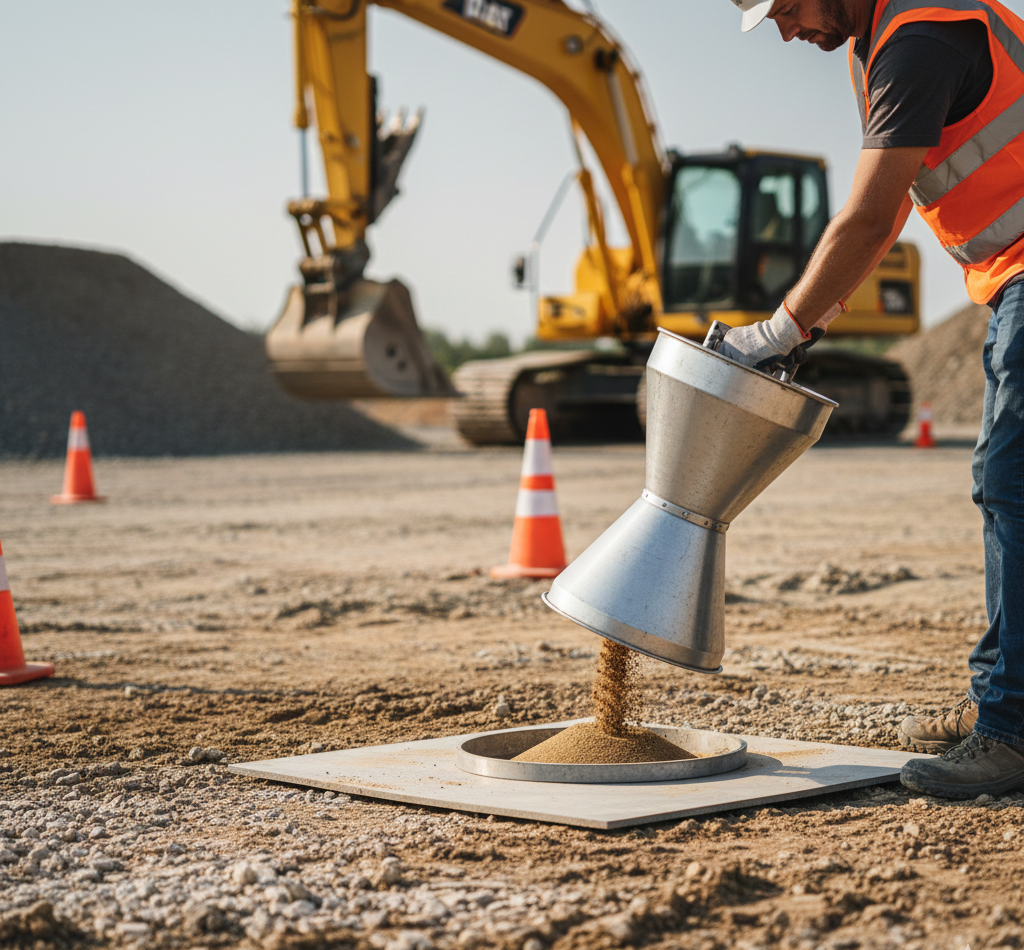
Every bridge, highway, building, and dam that stands safely for decades has one thing in common: the materials used to build it were tested rigorously before, during, and after construction. Construction materials testing is not a formality, it is the difference between a structure that lasts a century and one that fails prematurely. Whether you’re a civil engineer, a lab technician, or a construction project manager, understanding the right construction materials testing equipment and how to use it is absolutely essential to delivering safe, code-compliant, and durable results.
What Is Construction Materials Testing and Why Does It Matter?
Construction materials testing (CMT) is the scientific process of evaluating the physical and mechanical properties of materials such as soil, concrete, asphalt, aggregate, and cement to ensure they meet project specifications and industry standards like ASTM, AASHTO, and ISO. From a simple concrete slump test on a job site to a full triaxial test for soil strength in a geotechnical lab, every procedure serves a purpose: confirming that the material being used will perform as expected under real-world loads, temperatures, and environmental conditions.
Skipping or cutting corners on materials testing creates compounding risk. A road paved with improperly tested asphalt can develop rutting and cracking within a few years. Concrete that hasn’t been checked for the right compressive strength can crack under load. Soil that hasn’t undergone field density testing may settle unevenly, causing structural shifts over time. Accurate testing prevents these failures before they happen.
Soil Testing: Building on a Solid Foundation
Before any structure goes up, the ground beneath it must be thoroughly understood. Soil testing equipment is among the most critical tools in the geotechnical engineer’s arsenal. The Atterberg Limits test determines a soil’s plasticity and liquid limit, which are essential for predicting how the soil will behave when it gets wet. An automatic soil compactor machine is used to simulate compaction in the field and ensure embankments and subgrades meet density requirements.
For load-bearing assessments, the CBR field test set (California Bearing Ratio) is the go-to method for evaluating pavement subgrade strength, while penetrometers are used to quickly assess the resistance of soil in the field. Soil moisture testing equipment and soil pH testers allow technicians to monitor conditions that can affect both the soil’s performance and the durability of embedded structures. Rounding out a complete soil lab are soil permeameters, soil augers for sampling, and specific gravity of soil test equipment all indispensable for a thorough subsurface investigation.
Concrete Testing: Ensuring Structural Integrity Above Ground
Concrete is the backbone of modern infrastructure, and no batch should go into a structure without proper verification. Concrete testing covers everything from the plasticity of fresh mixes to the long-term strength of cured specimens.
The concrete slump test is one of the most widely used field tests, measuring workability before the pour begins. Fresh concrete testing also includes checking concrete air entrainment the amount of air deliberately mixed into concrete to improve freeze-thaw resistance using an air entrainment meter. Proper concrete curing conditions are equally important: temperature and humidity must be maintained after pouring to allow the mix to hydrate properly and achieve full strength.
For evaluating hardened concrete, the concrete compressive strength testing machine is the centerpiece of any concrete lab, crushing cylindrical specimens cast in concrete test cylinders to verify minimum strength requirements. The flexural beam test measures concrete’s tensile strength important for slabs and pavements. When inspecting existing structures, non-destructive concrete testing and concrete scanning equipment allow engineers to assess internal conditions without breaking anything apart. Crack monitors are another valuable diagnostic tool for tracking the progression of existing damage over time.
Asphalt Testing: The Science Behind Smooth, Durable Roads
Roads are among the most heavily used pieces of infrastructure, and asphalt testing equipment ensures they can handle the weight, traffic volume, and temperature swings they’ll face across their service life. A comprehensive asphalt testing program covers everything from raw binder properties to the final compacted pavement surface.
Asphalt viscosity test equipment evaluates how a binder flows at high temperatures, a key factor in preventing rutting during summer heat. The asphalt ductility test measures a binder’s flexibility, while the penetration test for asphalt determines its hardness and consistency. For mix design, Marshall asphalt test stability machines and asphalt mixer design equipment help engineers dial in the optimal balance of aggregates and binder. Asphalt extraction machine tests are used to recover and analyze the binder content from compacted samples, while asphalt Rice testing determines the theoretical maximum specific gravity of the mix.
Field testing relies on asphalt core drill and bits to pull up pavement cores for lab analysis, and permeability test equipment to check how water moves through the pavement structure. Accurate temperature monitoring using thermometers for asphalt testing is essential throughout the paving process, as mix temperature directly affects compaction quality.
Aggregate and Cement Testing: Checking the Building Blocks
Aggregate the sand, gravel, and crushed stone that makes up the bulk of concrete and asphalt mixes must be carefully graded and tested for quality. ASTM test sieves for aggregate and a sieve machine are used to perform gradation analysis, determining the particle size distribution of a sample. Sample splitters and dividers ensure representative samples are used in each test. Aggregate moisture probes and aggregate water test equipment are used to control water-to-cement ratios in concrete mixing operations.
On the cement side, tests like the Vicat test measure setting time as a critical parameter for scheduling concrete pours while the cement Blaine air permeability apparatus evaluates fineness, which affects strength development and workability. Cement compressive strength testing using cube molds is the standard for verifying that a cement product meets grade specifications. Mortar testing and grout testing round out the picture for bonding applications and specialized fills.
Lab Scales, Ovens, and Thermometers: The Support Equipment That Powers Every Test
Precision testing doesn’t happen without precision support equipment. Lab scales and balances are used in virtually every materials test from weighing aggregate samples for sieve analysis to determining moisture content of soil specimens. Options range from portable field scales and bench scales to highly accurate lab mechanical balances and moisture analyzers from trusted brands like Ohaus, Adam Equipment, and Radwag.
Industrial lab ovens and furnaces are essential for drying soil and aggregate samples to a constant mass — a prerequisite for accurate moisture content calculations. Benchtop convection ovens, economy muffle furnaces, and vacuum ovens each serve different temperature ranges and material types.
Temperature measurement runs throughout every category of materials testing. Digital thermometers, digital infrared thermometers, thermocouple probes, and data loggers all ensure that thermal conditions during testing and curing are properly recorded and controlled. Thermal imaging cameras add a layer of non-destructive inspection for identifying moisture infiltration, heat loss, and subsurface anomalies in finished structures.
Choosing the Right Construction Materials Testing Equipment
Selecting the right testing equipment comes down to three factors: the tests you’re required to run (per ASTM, AASHTO, or local code), the environment where testing will take place (lab vs. field), and the volume of testing your operation demands. Certified MTP carries over 57,000 construction and lab products from 100+ expert USA suppliers, all meeting or exceeding ASTM, AASHTO, and ISO compliance standards so you can be confident that every measurement you take is backed by equipment built to industry specifications. With fast nationwide shipping and over 30,000 satisfied customers, Certified MTP is the trusted one-stop source for professionals who can’t afford to get it wrong.
Explore Certified MTP’s full range of asphalt testing equipment, concrete testing equipment, soil testing equipment, cement testing equipment, aggregate testing equipment, lab scales, industrial ovens, and thermometers all in one place


