

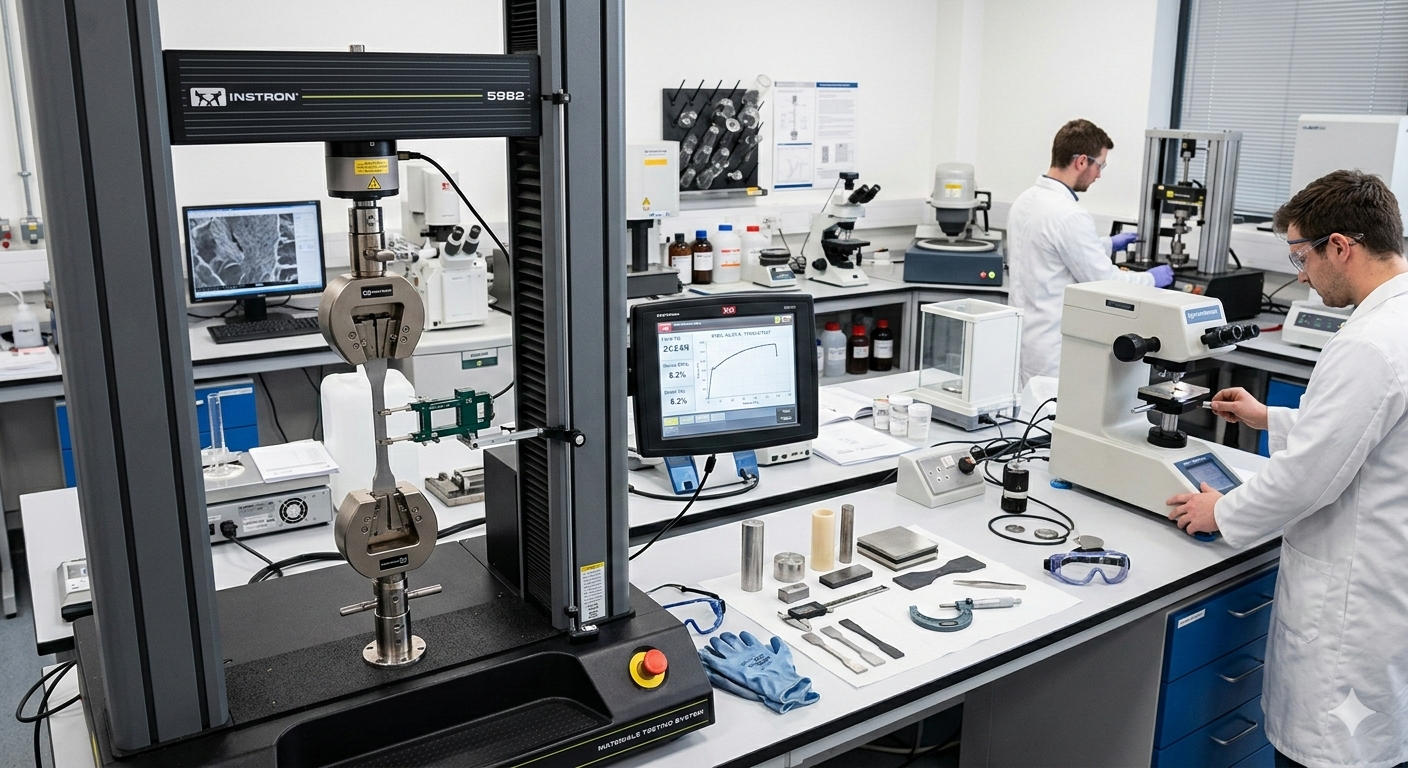
Laboratories play a vital role in ensuring the quality and reliability of construction materials. Whether testing soil, aggregates, concrete, or asphalt, laboratories depend on specialized equipment to produce accurate and consistent results. Reliable laboratory tools allow engineers, technicians, and researchers to measure material properties precisely, helping ensure that materials meet industry standards and safety requirements.
Companies such as Certified Material Testing Products provide a wide range of laboratory equipment designed specifically for materials testing labs, construction companies, and engineering professionals. The right tools not only improve testing accuracy but also increase efficiency and help laboratories maintain compliance with testing standards.
Understanding the most essential laboratory equipment and their uses can help testing facilities build a well-equipped lab capable of delivering dependable results.
Why Laboratory Equipment Matters in Materials Testing
In materials testing, even minor measurement errors can lead to incorrect conclusions about a material’s performance. Reliable laboratory equipment ensures that technicians can perform standardized tests accurately and repeatedly.
High-quality lab equipment provides several important benefits:
- Improved accuracy – Precision instruments ensure reliable test results.
- Consistency in testing – Standardized equipment helps maintain repeatable procedures.
- Compliance with regulations – Many tests must follow ASTM or AASHTO standards.
- Efficiency in laboratories – Proper tools streamline testing workflows.
When laboratories use dependable equipment, they can confidently evaluate material strength, durability, and performance.
Common Types of Laboratory Equipment Used in Materials Testing
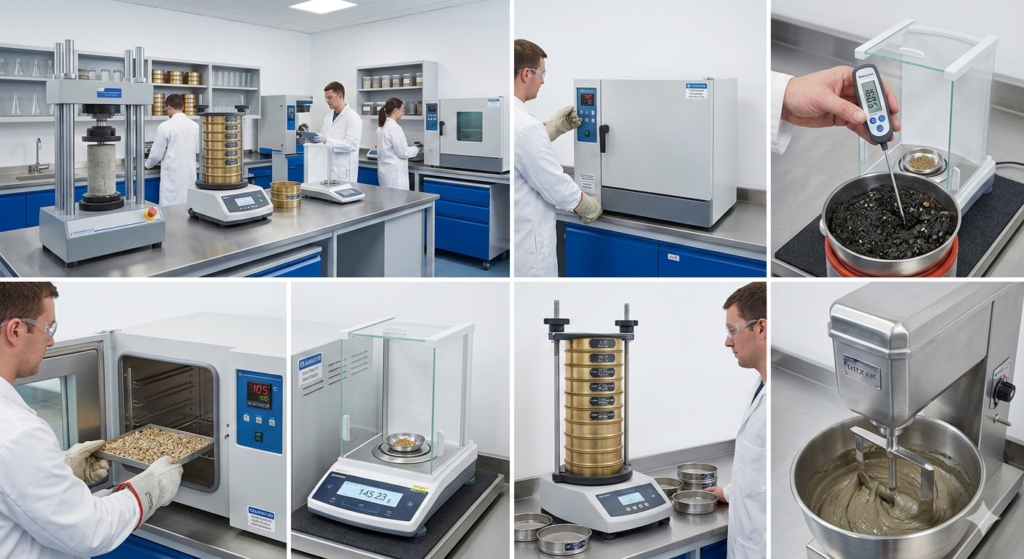
Different materials require different testing methods, which means laboratories must rely on a variety of specialized tools. Below are some of the most commonly used laboratory equipment found in materials testing facilities.
1. Laboratory Ovens
Laboratory ovens are widely used for drying materials and removing moisture before testing. They maintain controlled temperatures that allow technicians to accurately measure moisture content in soil, aggregates, and other materials.
Ovens are commonly used in tests such as:
- Moisture content analysis
- Sample preparation
- Drying aggregates and soils
- Asphalt testing preparation
Maintaining consistent temperatures is essential for accurate testing results, making laboratory ovens one of the most important tools in materials testing labs.
2. Laboratory Balances and Scales
Precise measurement is critical when conducting materials testing. Laboratory balances and scales are used to measure sample weights accurately, which is necessary for many testing procedures.
Technicians rely on balances when performing:
- Aggregate gradation tests
- Soil classification tests
- Concrete mix analysis
- Moisture content calculations
High-quality balances ensure measurements remain consistent and reliable throughout testing procedures.
3. Sieves and Sieve Shakers
Sieve analysis is one of the most common tests performed in materials testing laboratories. It helps determine the particle size distribution of aggregates, sand, and soil.
Sieve testing is important because particle size affects the strength and stability of construction materials. Sieve shakers help automate the process, ensuring consistent shaking and accurate separation of particles.
This equipment is essential for:
- Aggregate testing
- Soil classification
- Quality control in construction materials
4. Thermometers and Temperature Measurement Tools
Temperature control plays an important role in many testing procedures, especially when working with asphalt, concrete, and laboratory ovens.
Thermometers help technicians monitor temperature conditions to ensure tests are conducted within specified ranges. Accurate temperature readings are necessary to maintain testing standards and obtain reliable results.
Temperature measurement tools are commonly used in:
- Asphalt testing
- Concrete curing monitoring
- Laboratory oven temperature checks
- Environmental condition monitoring
5. Mixers and Sample Preparation Equipment
Before materials can be tested, they often require proper mixing and preparation. Laboratory mixers ensure that samples are thoroughly blended, providing uniform consistency for testing.
Mixers are frequently used in:
- Concrete sample preparation
- Soil sample preparation
- Asphalt mixture testing
- Mortar and cement testing
Proper sample preparation is essential because uneven mixing can lead to inaccurate testing results.
How to Choose the Right Laboratory Equipment

Selecting laboratory equipment requires careful consideration of several factors. Laboratories should evaluate their testing needs and ensure that the equipment they choose meets industry standards.
Important factors to consider include:
Testing requirements
Different materials require different testing tools. Laboratories should select equipment based on the types of tests they perform most frequently.
Accuracy and calibration
Equipment must provide precise measurements and be capable of regular calibration to maintain accuracy.
Durability and reliability
Laboratory equipment should be durable enough to handle frequent use in demanding testing environments.
Compliance with standards
Equipment should meet relevant ASTM or AASHTO testing requirements to ensure standardized procedures.
Investing in high-quality laboratory equipment helps laboratories maintain reliable testing results and improve overall efficiency.
Supporting Quality Construction Through Reliable Testing

Construction and engineering projects depend on accurate testing to ensure the strength and durability of materials used in infrastructure and building projects. Well-equipped laboratories play a critical role in maintaining quality control throughout the construction process.
By using reliable laboratory equipments such as ovens, balances, sieves, thermometers, and mixers, technicians can perform standardized tests that provide valuable insights into material performance. These tools help engineers make informed decisions and ensure that construction materials meet strict safety and quality standards.
As construction technologies evolve, the demand for precise and dependable laboratory equipment will continue to grow. Laboratories that invest in high-quality tools will be better equipped to support safe, durable, and long-lasting infrastructure.
FAQ
What equipment is used in a materials testing laboratory?
Common laboratory equipment includes ovens, balances, sieves, sieve shakers, thermometers, mixers, and compression testing machines used to analyze construction materials.
Why is laboratory equipment important in materials testing?
Laboratory equipment ensures accurate measurements and consistent testing results, which are essential for evaluating material quality and performance.
What materials are typically tested in construction laboratories?
Construction labs commonly test soil, aggregates, asphalt, concrete, cement, and other materials used in infrastructure projects.
How often should laboratory equipment be calibrated?
Most laboratory equipment should be calibrated regularly according to manufacturer recommendations and testing standards to maintain accuracy.
Where can laboratories purchase materials testing equipment?
Laboratories and construction professionals can obtain specialized testing equipment from suppliers such as Certified Material Testing Products, which offers tools designed specifically for materials testing applications.


