


By Cherry Joy Robles, Editorial Writer, Workyard
Using hours alone to bill a testing visit leaves important questions unanswered. The time record helps establish when the technician was on site. What was tested and cast is in the field record. Whether the client pays for it depends on the agreement. An invoice line holds up only when all three point to the same work.
What makes a visit billable
A single construction materials testing visit can hold several kinds of time. The technician drives to the site, waits for the first truck, samples the load, runs field tests and casts specimens. Sometimes the placement is canceled after arrival, or the requested test changes on site. Some of that time is chargeable under one agreement and not under another.
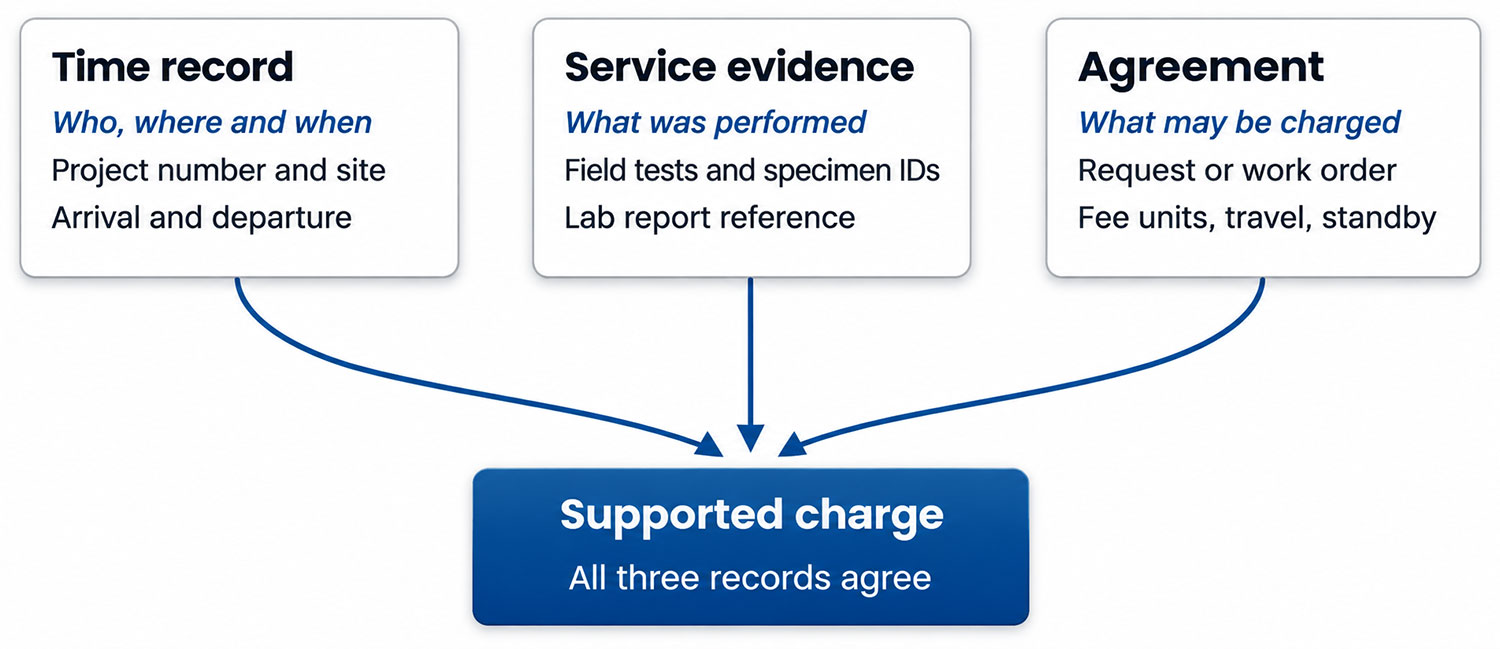
Figure 1. The three records an invoice line depends on.
Tracing a visit to the work performed
Matching records starts with being able to connect them. To check a visit’s records, work backward from the lab report. Each strength result should carry a specimen or set number. That number leads to the field record from the day the cylinders were cast.
On the field record, look for the client, the project number, the placement location, the date and the technician. It should also name the tests performed, plus arrival and departure times where the agreement bills by time. A reference to the request or work order shows why the technician was sent. Through the project number and date, the time record connects to the same visit.
Where a reference is missing, someone has to rebuild the link from memory or email.
Agencies and clients set their own identification rules. The Arkansas Department of Transportation’s field sampling and testing manual, for example, includes a standard sample identification card. Check the client’s specification.
The field record and the lab report do different jobs. The field record captures what happened on site. The lab report records test methods and results, and it usually arrives later. Concrete cylinders may be tested at specified ages, often including 7 and 28 days. The applicable project requirements determine the testing schedule. The report for a Tuesday placement may not exist when that week’s visits are reviewed.
How to match testing services to invoice charges
Billing review runs the other way. It starts from the visit and moves forward to the charges.
Illustrative example. The project, times and tests below are invented to show the method.
A technician is scheduled for a slab placement on Project 26-114. The time record shows
arrival at 7:00 a.m. and departure at 12:15 p.m. The field record notes a two-hour wait for
the first truck. It then lists slump, air content and temperature tests and one cylinder set. The
office reviews the visit at the end of the billing period, after the 7-day breaks from that set
are reported.
Each charge needs a basis in the agreement, and agreements set those bases differently. The City of Ithaca’s published 2026 materials testing solicitation provides an example of a proposed fee structure, not an industry standard or evidence of a signed agreement. Its schedule lists technician time in half-day or day units and compressive strength testing of concrete cylinders by the test. The two-hour wait is the part the time record cannot settle. Whether standby is billable, and at what rate, depends on the agreement. Travel, minimums, retests and canceled trips need the same check.
With those terms in view, the billing reviewer sorts the rest of the visit into lines.
- Supported, subject to the agreement. For 7:00 a.m. to 12:15 p.m., the time record confirms the technician’s attendance, while the agreement determines whether a half-day, full-day or other time unit applies. The field record supports the field tests and specimen preparation. Laboratory strength tests can be checked against the specimen results and billed separately only where the agreed fee schedule permits.
- Missing evidence. The time record shows a return trip the next afternoon, but no field record explains it. Nothing yet verifies a service, so that line waits until someone confirms what was done and whether the client asked for it.
- Performed but not yet billed. The 7-day results are on the released lab report, but no billing entry references that set. Before adding a line, the billing reviewer confirms the agreement covers the test and no earlier invoice has billed it.
Resolving discrepancies before invoicing
Many discrepancies come down to one detail. A project number is wrong, or the test request changed on site. A cylinder set has no ID, or a return visit has no stated reason. Sometimes a charge has no report behind it.
The person preparing the invoice may spot the problem first. Settling it usually takes someone who was there or who approved the work.
On-site facts come from the technician, such as why the visit included a wait or why a second trip was needed. Questions about results go to the technical reviewer, who can confirm which specimens were tested and released. For anything the client authorized, ask the project manager or account lead. In a smaller laboratory, one person may hold two of these roles. Send each question with the record attached. A technician can usually explain a delay from this week. Explaining one from last month is harder.
Digital time records can help reviewers find entries by project and date when those fields are captured consistently. Configurable field forms can also capture request references or specimen IDs, depending on how the team sets them up. For example, Workyard offers project-linked time records and customizable Smart Forms, but it does not automatically reconcile laboratory tests with invoice lines. These tools help organize supporting records; the agreement and service evidence still determine what can be charged.
A final check before an invoice goes out
Each invoice line should answer three questions. Which visit occurred? Which services do the records verify? Which charges does the client’s agreement allow? Recorded hours answer only the first. Hold any line that stops there, and send the open question to its owner before the invoice goes out. Note on each held line which record is missing and who was asked. The next billing cycle then starts with known questions, and each held charge has a named person to answer it.
Run the same three-record check in reverse as well. Compare the lab reports released during the billing period against the draft invoice. That comparison can reveal results that have not yet been reviewed for billing, like the example’s 7-day tests, before the period closes.
Cherry Joy Robles is an editorial writer at Workyard, the construction operations platform for specialty contractors and self-performing general contractors. She writes about crew time, labor costs, field records and payroll compliance.
Sources
Arkansas Department of Transportation. Manual of Field Sampling and Testing Procedures,
April 2026. https://media.ark.org/ardot/Field-Manual-April-2026.pdf
Certified MTP. Why Do Some Concrete Test Cylinders Fail Before They Even Reach the Lab? https://blog.certifiedmtp.com/why-do-some-concrete-test-cylinders-fail-before-they-even-reach-t he-lab/
Certified MTP. What To Do If Your Concrete Fails A Strength Test. https://certifiedmtp.com/resources/addressing-failed-concrete-tests/
City of Ithaca. Construction Materials Testing Services 2026, solicitation contract and proposed fee schedule (May 1, 2026).


