

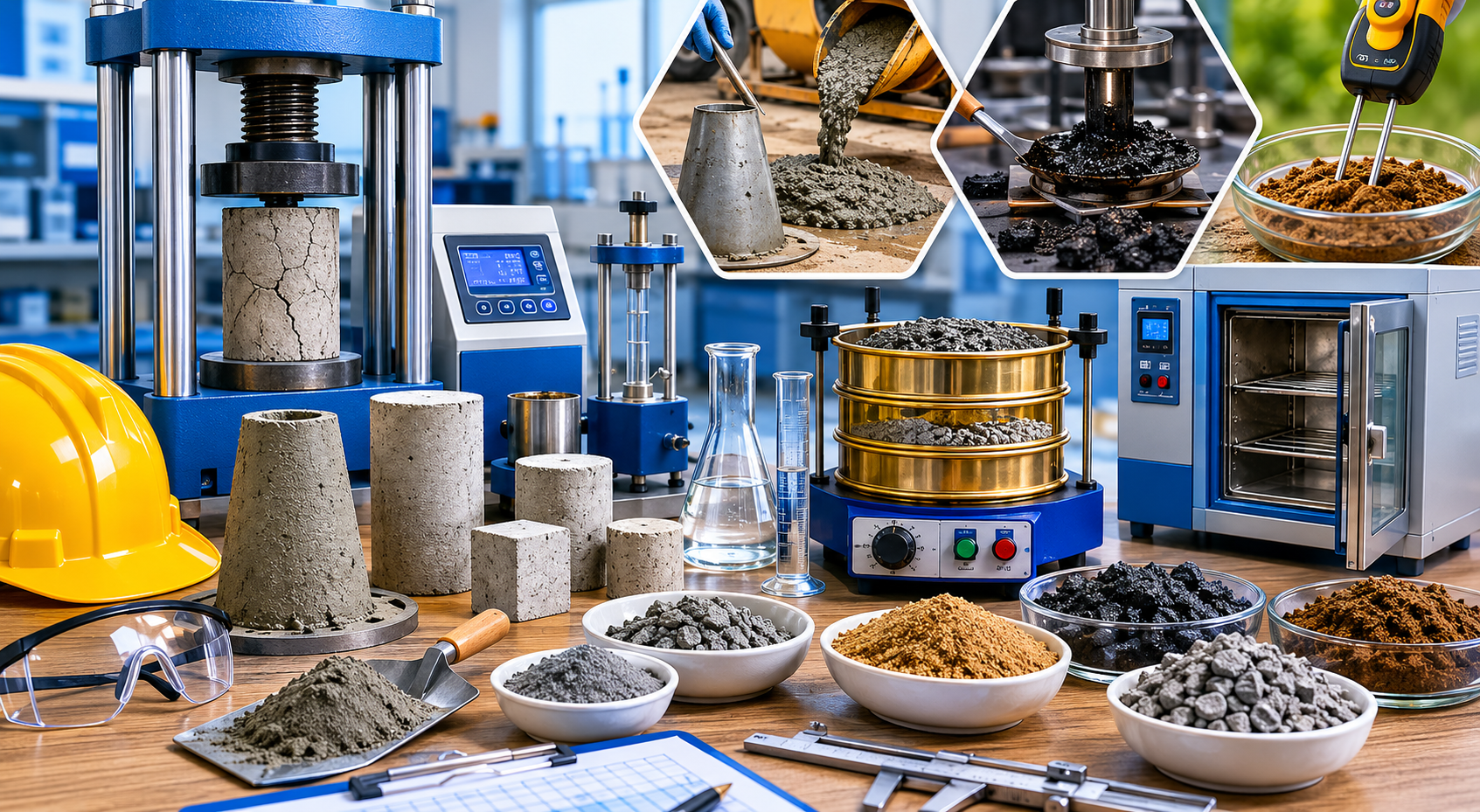
Material testing is one of the most important processes in the construction and engineering industries. The safety, durability, and performance of any structure depend heavily on the quality of the materials used during construction. From highways and bridges to residential and commercial buildings, every project requires materials that meet strict quality and safety standards. Material testing helps engineers and contractors evaluate these materials before they are used, reducing the risk of structural problems and ensuring long-term reliability.
In modern construction, testing has become essential because materials are constantly exposed to environmental conditions, moisture, heavy loads, and temperature changes. Without proper testing, weak or defective materials can lead to cracks, instability, expensive repairs, and safety concerns. This is why laboratories and construction companies rely on specialized testing procedures and equipment to maintain quality control throughout every stage of a project.
The Role of Material Testing in Construction
Material testing helps determine the physical and mechanical properties of construction materials. These tests ensure that the materials used in a project can handle the required stress and environmental conditions. Testing also helps construction professionals comply with ASTM and AASHTO standards while improving overall project performance.
Proper testing provides several benefits, including:
- Improved structural safety
- Better construction quality control
- Reduced risk of material failure
- Longer-lasting infrastructure
- Lower maintenance costs
- Compliance with industry regulations
By identifying material weaknesses early, testing helps prevent costly construction errors and delays.
Importance of Concrete Testing
Concrete is one of the most widely used materials in construction, making concrete testing a critical part of quality assurance. Concrete testing helps determine compressive strength, workability, durability, and curing performance. Since concrete is used in foundations, columns, roads, and bridges, its strength must be carefully evaluated before use.
Laboratories commonly use compression testing machines, slump cones, curing tanks, and air meters to analyze concrete properties. Compression testing is especially important because it measures how much load the concrete can withstand before failure.
Reliable concrete testing equipment helps laboratories produce accurate and repeatable results for construction projects.
Why Soil Testing Matters
Soil testing is essential before construction begins because the foundation of any structure depends on soil stability and load-bearing capacity. Poor soil conditions can cause foundation settlement, cracking, and structural instability over time.
Engineers use soil testing to analyze moisture content, compaction, permeability, density, and shear strength. These tests help determine whether the soil is suitable for construction and what type of foundation design is required.
Commonly used tools include compaction equipment, moisture ovens, permeability testing apparatus, and sieve shakers. High-quality soil testing equipment allows laboratories to perform detailed geotechnical analysis for construction and environmental projects.
Asphalt Testing for Road Durability
Asphalt testing plays a major role in highway construction and pavement engineering. Roads are constantly exposed to traffic loads, heat, rain, and temperature fluctuations, making asphalt quality extremely important.
Testing helps evaluate asphalt stability, binder content, compaction quality, and resistance to cracking or deformation. Laboratories often use Marshall stability machines, asphalt content furnaces, and penetration testing devices to ensure pavement durability.
Using dependable asphalt testing equipment improves road quality and reduces long-term maintenance costs.
Aggregate Testing and Material Performance
Aggregates are used in both concrete and asphalt mixtures, making aggregate testing another essential part of material analysis. Testing helps determine particle size distribution, impact resistance, abrasion resistance, and specific gravity.
Properly graded aggregates improve concrete strength, pavement stability, and overall construction performance. Poor-quality aggregates can weaken structures and reduce durability.
Laboratories commonly use sieve shakers, abrasion machines, and impact testers to analyze aggregate quality. Accurate testing with professional aggregate testing equipment helps maintain consistency in construction materials.
Cement Testing and Quality Assurance
Cement quality directly affects the performance and durability of concrete. Cement testing helps laboratories evaluate fineness, consistency, setting time, and compressive strength to ensure reliable hydration and curing.
Testing procedures help identify variations in cement composition that could impact structural performance. Equipment such as Vicat apparatus, mortar mixers, and compression testing machines are commonly used for cement analysis.
Using reliable cement testing equipment helps laboratories maintain testing accuracy and improve construction quality.
The Importance of Accurate Laboratory Equipment
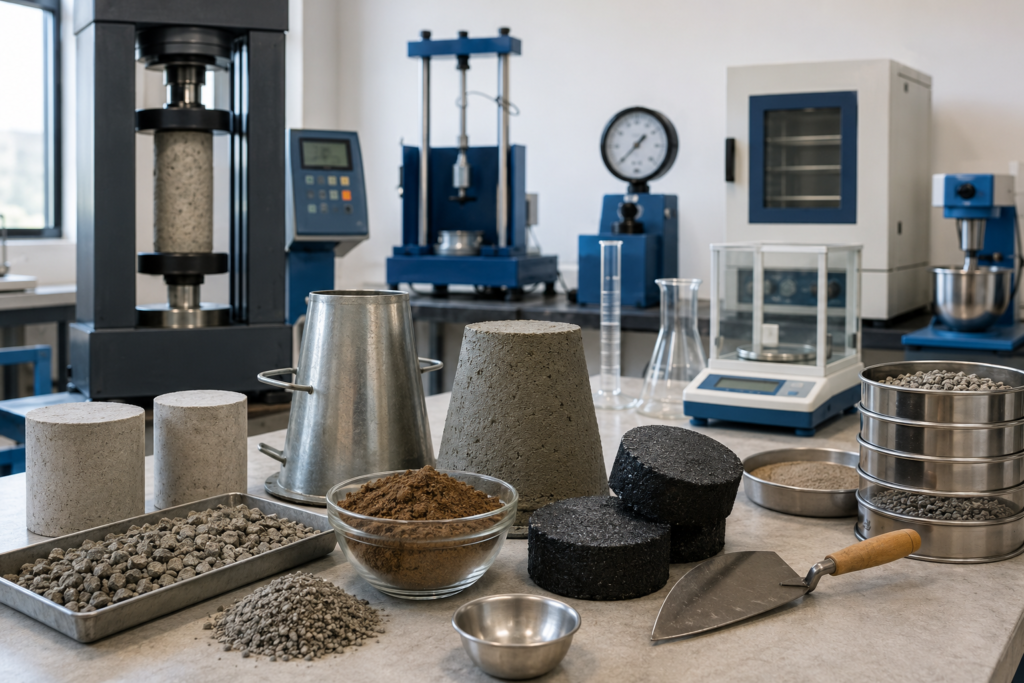
Modern material testing laboratories depend on precise and well-maintained equipment to produce reliable results. Laboratory ovens, balances, moisture analyzers, and sieve shakers all contribute to accurate testing procedures.
Moisture content testing is especially important because water levels can significantly impact compaction, curing, and material strength. Accurate weighing systems and temperature-controlled equipment also help laboratories comply with testing standards.
Regular calibration and maintenance are necessary to ensure testing accuracy and prevent measurement errors.
How Technology is Improving Material Testing
Advancements in technology have greatly improved the material testing industry. Many laboratories now use automated testing systems and digital software to improve efficiency, reduce manual errors, and simplify data collection.
Automated equipment offers several advantages, including:
- Faster testing procedures
- Improved testing consistency
- Better data accuracy
- Easier report generation
- Enhanced laboratory productivity
Digital systems also help laboratories maintain organized testing records and meet modern quality assurance requirements.
Long-Term Benefits of Material Testing
Material testing does more than ensure immediate construction quality. It also contributes to the long-term safety and durability of infrastructure projects. By identifying poor-quality materials before construction begins, testing helps reduce maintenance expenses and extend the lifespan of structures.
Proper testing also supports sustainable construction practices by minimizing material waste and improving resource efficiency. Stronger and more durable infrastructure ultimately benefits both construction companies and the communities that rely on these structures every day.
Conclusion
Material testing is an essential part of modern construction because it ensures the quality, strength, and reliability of construction materials. From concrete and soil testing to asphalt and aggregate analysis, every testing procedure plays a critical role in maintaining structural safety and project success.
As construction standards continue to evolve, the demand for accurate testing methods and advanced laboratory equipment will continue to grow. Investing in reliable testing procedures and high-quality instruments helps engineers and contractors deliver safer, stronger, and longer-lasting infrastructure projects for the future.


