

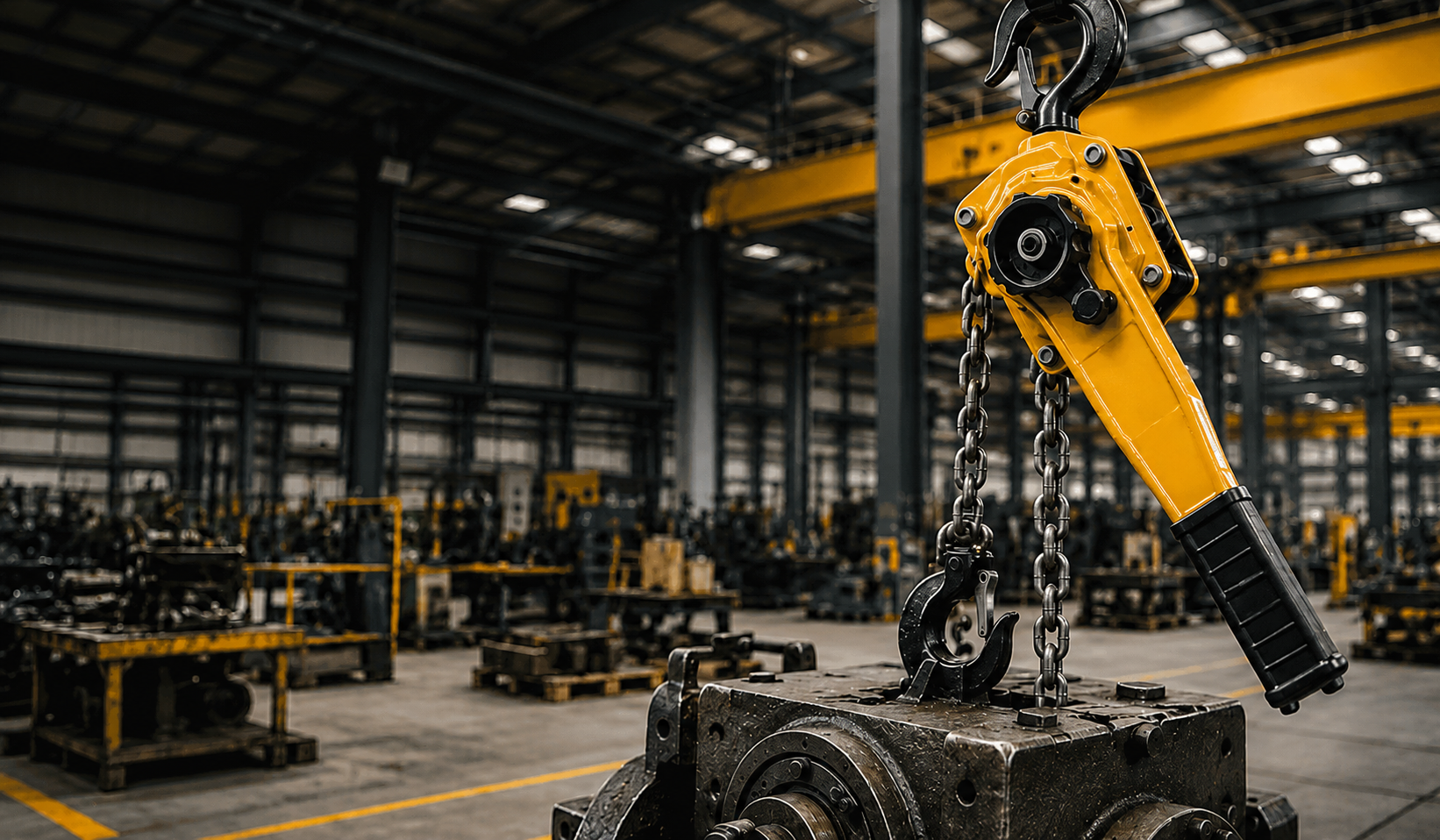
Heavy equipment lifting requires precision, safety, and dependable tools that can perform consistently in demanding industrial environments. From manufacturing facilities and warehouses to construction sites and maintenance workshops, lifting equipment plays a major role in daily operations. Among the many lifting solutions available today, Lever Hoists continue to stand out as one of the most reliable and versatile options for handling heavy loads efficiently.
Industries rely on lifting systems that not only improve productivity but also reduce workplace risks and downtime. Whether used independently or alongside systems like a workstation crane or a 1 ton jib crane, lever hoists provide the strength, portability, and control needed for safe material handling. Their simple design, durability, and ease of operation make them a preferred choice across multiple industries.
Understanding Lever Hoists
A lever hoist is a manually operated lifting and pulling device designed to lift, lower, or position heavy loads with accuracy. It operates through a lever handle that controls the movement of the load chain. Unlike electric lifting equipment, lever hoists do not require a power source, making them highly practical for remote locations, outdoor job sites, and maintenance operations.
Lever hoists are commonly used for:
- Pulling heavy machinery into position
- Lifting industrial equipment
- Tightening and tensioning loads
- Equipment installation and maintenance
- Construction and rigging applications
Their compact structure allows operators to work in confined spaces where larger lifting systems may not fit.
Why Lever Hoists Remain Popular in Industrial Applications
1. Exceptional Reliability in Tough Environments
One of the main reasons lever hoists remain widely used is their reliability under demanding conditions. Industrial facilities often expose lifting equipment to dust, moisture, heat, and heavy daily use. Lever hoists are designed with durable steel components and rugged load chains that can withstand harsh environments.
Because they are manually operated, lever hoists are less dependent on electrical systems that may fail during power outages or unstable site conditions. This reliability makes them ideal for heavy-duty operations where consistent performance is critical.
High Load Control and Precision
Heavy equipment lifting requires accurate positioning to avoid damage and ensure workplace safety. Lever hoists provide excellent control during lifting and lowering operations. Operators can carefully position machinery, steel components, or industrial materials without sudden movement.
This precision is especially important during:
- Machine alignment
- Equipment installation
- Maintenance tasks
- Structural assembly projects
When combined with a workstation crane, lever hoists can significantly improve material positioning and reduce manual handling risks.
Portability and Compact Design
Unlike larger overhead crane systems, lever hoists are lightweight and portable. Workers can easily carry them between job sites or move them within a facility. Their compact design also allows them to operate in narrow workspaces where traditional lifting systems may not be practical.
For industries with changing lifting requirements, portability offers a major advantage. Maintenance crews, construction teams, and warehouse operators can quickly deploy lever hoists without complicated installation procedures.
Cost-Effective Lifting Solution
Industrial businesses often seek lifting equipment that delivers long-term value without excessive operating costs. Lever hoists offer a cost-effective solution because they:
- Require minimal maintenance
- Do not consume electricity
- Have fewer mechanical components
- Provide long service life
Compared to powered lifting systems, lever hoists are affordable while still delivering strong lifting capabilities. This makes them an attractive option for small workshops, manufacturing facilities, and construction contractors.
Improved Workplace Safety
Safety remains one of the most important concerns in material handling operations. Improper lifting techniques and overloaded equipment can lead to workplace accidents, equipment damage, and production delays.
Modern lever hoists are designed with several safety features, including:
- Automatic load brakes
- Heavy-duty hooks with latches
- Durable load chains
- Overload protection systems
These features help operators maintain secure lifting operations and reduce the risk of load slipping or sudden drops. Proper training and routine inspections further enhance operational safety.
Compatibility with Other Lifting Systems
Lever hoists are often used together with larger lifting systems to improve efficiency and flexibility. For example, combining a lever hoist with a workstation crane creates a highly effective material handling setup for manufacturing and assembly operations.
A workstation crane supports load movement across a designated work area, while the lever hoist handles precise lifting and positioning tasks. This combination allows workers to move heavy equipment safely with less physical effort.
Similarly, a 1 ton jib crane paired with a lever hoist provides excellent support for localized lifting applications in workshops, warehouses, and fabrication facilities.
The Role of Workstation Cranes in Material Handling
A workstation crane is designed to improve efficiency in repetitive lifting operations. These cranes are commonly used in:
- Assembly lines
- Manufacturing facilities
- Packaging operations
- Warehouses
Workstation cranes help reduce worker fatigue by supporting smooth load movement across workstations. When integrated with lever hoists, they provide enhanced lifting precision and operational flexibility.
Benefits of workstation cranes include:
- Improved productivity
- Reduced manual lifting
- Better ergonomic support
- Efficient load transfer
- Increased workplace safety
Businesses looking to streamline their material handling processes often choose workstation crane systems because they are adaptable and space-efficient.
Advantages of Using a 1 Ton Jib Crane
A 1 ton jib crane is another valuable lifting solution frequently used in industrial facilities. These cranes are designed for localized lifting and can rotate to move loads within a specific radius.
Industries commonly use 1 ton jib cranes for:
- Loading and unloading materials
- Machine servicing
- Tool handling
- Fabrication work
- Maintenance operations
When combined with lever hoists, a 1 ton jib crane allows operators to lift and position heavy equipment more efficiently. This setup is especially useful in work areas where overhead crane coverage is limited.
Key benefits of a 1 ton jib crane include:
- Space-saving design
- Easy installation
- Flexible load movement
- Reduced worker strain
- Improved productivity
Because of their compact footprint and versatility, jib cranes remain a practical choice for many industrial environments.
Common Industries That Use Lever Hoists
Lever hoists are widely used across various industries because of their adaptability and durability. Some common sectors include:
Manufacturing
Manufacturing plants use lever hoists for machine maintenance, assembly operations, and equipment positioning.
Construction
Construction crews rely on lever hoists for lifting structural components, steel beams, and heavy tools.
Warehousing
Warehouses use lever hoists alongside workstation cranes and jib cranes to improve material movement and reduce manual labor.
Automotive
Automotive repair facilities use lever hoists to lift engines, heavy parts, and industrial tools safely.
Mining and Heavy Industry
Mining operations require rugged lifting equipment capable of handling demanding conditions and heavy loads.
Maintenance Tips for Lever Hoists
Proper maintenance helps ensure safe and reliable lever hoist operation. Recommended maintenance practices include:
- Inspecting load chains regularly
- Checking hooks for wear or damage
- Lubricating moving components
- Testing brake functionality
- Storing equipment in dry conditions
- Following manufacturer load limits
Routine inspections can help identify issues early and extend the lifespan of lifting equipment.
Choosing the Right Lever Hoist
Selecting the correct lever hoist depends on several factors, including:
- Load capacity requirements
- Lift height
- Operating environment
- Frequency of use
- Safety features
Businesses should also consider compatibility with systems like workstation cranes and 1 ton jib cranes when designing efficient lifting solutions.
Choosing high-quality lifting equipment from trusted manufacturers helps improve reliability, safety, and long-term performance.
Conclusion
Lever hoists continue to be a reliable choice for heavy equipment lifting because they offer durability, precision, portability, and cost-effective performance. Their ability to operate in demanding industrial environments makes them an essential tool for construction, manufacturing, warehousing, and maintenance operations.
When integrated with systems like a workstation crane or a 1 ton jib crane, lever hoists help create safer and more efficient material handling processes. These lifting solutions reduce manual effort, improve productivity, and support accurate load positioning across a wide range of industrial applications.
As industries continue to prioritize workplace safety and operational efficiency, lever hoists remain a trusted solution for handling heavy equipment with confidence and control.


