

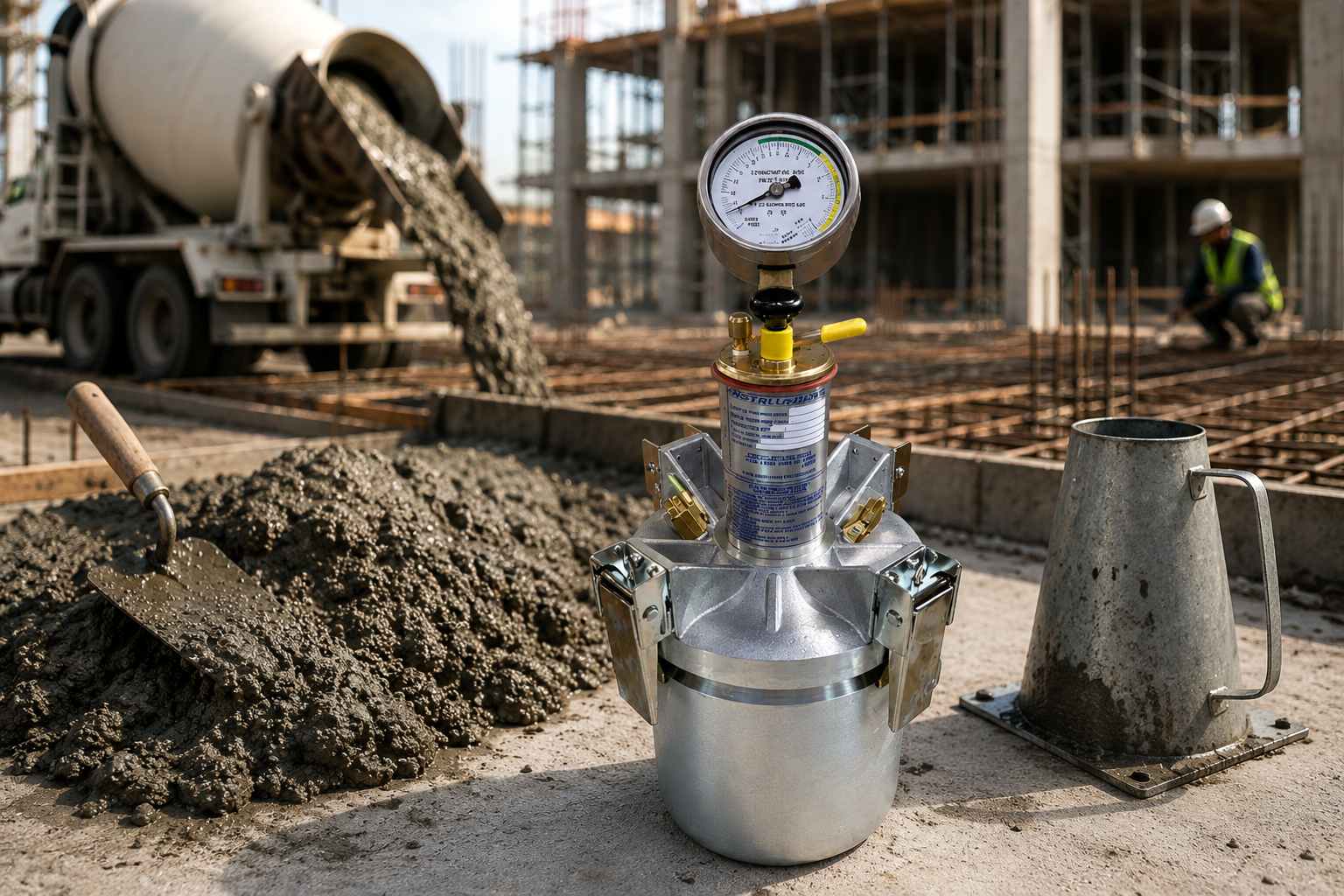
Concrete quality testing is essential for producing durable, long-lasting structures. Among the many factors that influence concrete performance, air content plays a critical role, particularly in regions exposed to freeze-thaw cycles. The Concrete Pressure Meter Type B Air Meter, designed to meet ASTM C231 standards, is one of the most trusted tools for measuring the air content of freshly mixed concrete.
Whether you’re a construction contractor, materials testing laboratory, quality control technician, or civil engineer, understanding how this instrument works and why it matters can help ensure your concrete meets performance specifications and industry standards.
What Is a Type B Concrete Air Meter?
A Type B Air Meter is a pressure-based testing device used to determine the percentage of entrained air in freshly mixed normal-weight concrete. The test method follows ASTM C231, one of the most widely accepted standards for measuring air content in concrete. The pressure method is preferred because it provides quick, accurate, and repeatable results in both laboratory and field environments.
The meter consists of a sealed chamber, pressure gauge, valves, and a calibration system that allows technicians to measure air content directly from a concrete sample. By applying a known pressure to the sample, the meter calculates the volume of entrained air present within the concrete mixture.
Why Air Content Matters in Concrete
Many people assume that air bubbles weaken concrete. While excessive entrapped air can reduce strength, properly controlled air entrainment actually improves concrete durability.
Entrained air creates millions of microscopic air voids throughout the concrete. These tiny voids provide space for water to expand when it freezes, reducing internal pressure and preventing cracking, scaling, and other freeze-thaw damage. Air entrainment also improves workability and helps concrete resist deicing chemicals and harsh environmental conditions.
Without proper testing, contractors risk producing concrete that may fail prematurely, resulting in costly repairs and structural issues.
Understanding ASTM C231
ASTM C231 is the standard test method for determining the air content of freshly mixed concrete using the pressure method. It is specifically intended for normal-weight concrete and provides a reliable means of verifying that the air content falls within specified limits.
The standard outlines:
- Equipment requirements
- Sample preparation procedures
- Testing methods
- Calibration procedures
- Reporting requirements
By following ASTM C231, technicians can ensure consistent testing practices across projects and laboratories.
Key Features of the Type B Air Meter
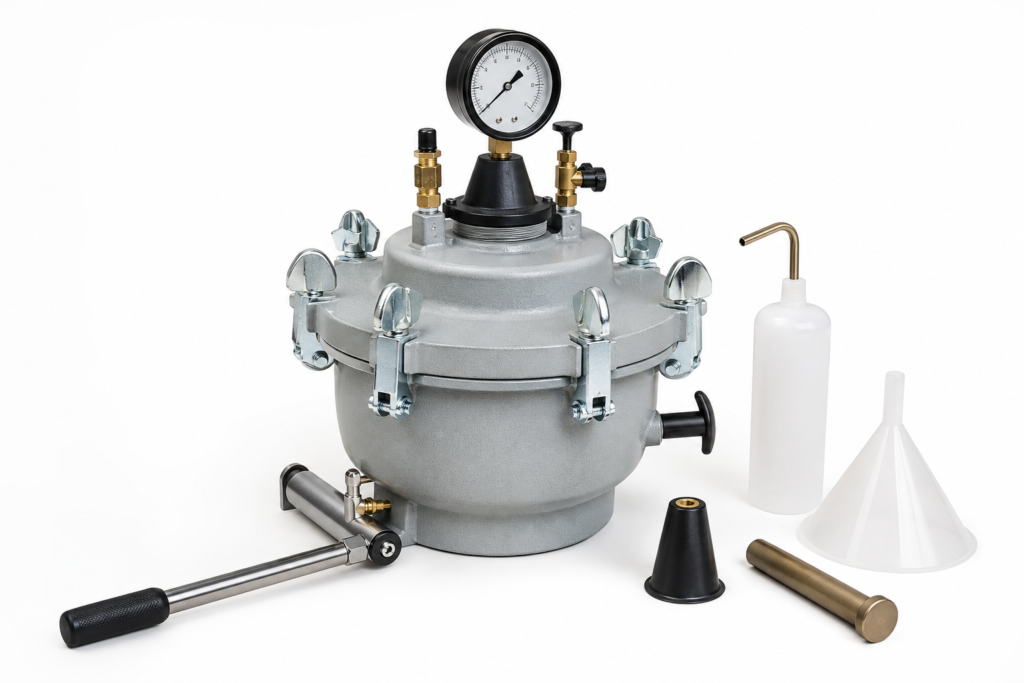
Modern Type B Air Meters are designed for durability, accuracy, and ease of use. Typical features include:
Precision Pressure Gauge
The gauge provides direct readings of air content, often with accuracy to 0.1% increments. Calibration adjustments help maintain reliable measurements over time.
Heavy-Duty Construction
Most high-quality air meters are manufactured from cast aluminum and stainless-steel components to withstand rugged jobsite conditions while remaining lightweight enough for field use.
Reliable Clamping System
A secure clamping mechanism ensures an airtight seal between the chamber and cover assembly. Proper sealing is critical for obtaining accurate pressure readings.
Fast Pressurization
Efficient pump systems allow operators to reach test pressure quickly with fewer pump strokes, reducing testing time and improving productivity.
Calibration Accessories
Calibration vessels and tubes are commonly used to verify meter accuracy and maintain compliance with testing standards.
How the Pressure Method Works
The testing process is straightforward but requires careful attention to detail.
Step 1: Fill the Meter
Freshly mixed concrete is placed into the measuring bowl in layers and consolidated according to ASTM requirements.
Step 2: Strike Off the Surface
The excess concrete is removed to create a level surface at the top of the bowl.
Step 3: Attach the Cover
The cover assembly is secured using the clamping system to create an airtight chamber.
Step 4: Add Water
Water is introduced through designated ports to eliminate trapped air above the sample.
Step 5: Apply Pressure
Using the built-in pump, the chamber is pressurized to a predetermined value.
Step 6: Release Pressure
The pressure is released into the sample chamber, and the resulting gauge reading indicates the air content percentage.
The entire procedure can be completed within minutes, making it ideal for field quality control applications.
Benefits of Using a Type B Air Meter
Improved Concrete Durability
Accurate air content measurements help ensure resistance to freeze-thaw damage and environmental deterioration.
Compliance with Specifications
Many construction projects specify allowable air content ranges. A Type B Air Meter helps verify compliance before concrete placement.
Better Quality Control
Regular testing allows technicians to identify variations in concrete mixtures and make adjustments before problems occur.
Faster Decision Making
Rapid test results help project teams maintain production schedules and avoid delays.
Reduced Risk of Failure
Monitoring air content helps prevent costly structural issues caused by improper air entrainment levels.
Common Applications
Type B Air Meters are widely used in:
- Highway construction projects
- Bridges and overpasses
- Airport pavements
- Commercial buildings
- Residential foundations
- Precast concrete manufacturing
- Municipal infrastructure projects
Any project requiring durable concrete can benefit from accurate air content testing.
Type B Air Meter vs. Volumetric Air Meter
While both instruments measure air content, they serve different purposes.
A Type B Air Meter is designed primarily for normal-weight concrete and offers faster testing. Volumetric air meters, sometimes called roller meters, are preferred when testing lightweight aggregate concrete because the pressure method may not provide accurate results for those mixtures.
For most standard construction projects, the Type B Air Meter remains the preferred choice due to its speed, simplicity, and accuracy.
Maintenance Tips for Long-Term Accuracy
To ensure reliable performance:
- Clean the chamber after every test.
- Inspect gaskets and seals regularly.
- Verify calibration according to manufacturer recommendations.
- Store the meter in a protective carrying case.
- Replace worn valves and fittings promptly.
Routine maintenance extends equipment life and helps maintain ASTM compliance.
Conclusion
The Concrete Pressure Meter Type B Air Meter is an indispensable tool for quality control professionals who need accurate measurements of air content in freshly mixed concrete. By complying with ASTM C231 requirements, this instrument helps contractors, engineers, and testing laboratories produce concrete that meets durability, strength, and performance expectations.
From highways and bridges to residential foundations and commercial developments, accurate air entrainment testing plays a crucial role in delivering long-lasting concrete structures. Investing in a reliable Type B Air Meter helps ensure consistent quality, regulatory compliance, and confidence in every concrete pour.


